


10 min read

Selling a Small Business in Nashville: A 6-Step Guide for Business Owners

Written by Updated July 22, 2026
Picture of Joseph Steigman
Joseph Steigman

Joe Steigman is the Founder of Legacy Entrepreneurs, a boutique business brokerage and exit advisory firm focused on helping business owners maximize value and transition their companies with confidence. With a background that combines operational leadership, corporate consulting, finance, and entrepreneurship, Joe brings a practical, owner-focused perspective to business sales and acquisitions. Joe is a Certified Business Intermediary (CBI), a designation awarded by the International Business B...

Selling a Small Business in Nashville: A 6-Step Guide for Business Owners

Selling a small business in Nashville begins well before you put it on the market. A successful sale depends on understanding what your business is worth, preparing for buyer due diligence, and presenting a business that can operate without relying heavily on you. Those steps can influence both your final sale price and whether a deal closes at all.

Buyers look beyond revenue and profit. They want reliable financial records, consistent cash flow, a capable management team, and a business that can transition smoothly after closing. Addressing these areas before going to market can reduce delays, strengthen your negotiating position, and help you avoid leaving money on the table.

Preparation matters because buyer demand remains healthy for quality businesses. According to the IBBA and M&A Source Q2 2025 Market Pulse Survey, 57% of advisors reported a seller's market for businesses valued between $1 million and $2 million, the largest year-over-year improvement among all market segments. In this guide, we'll walk through the six steps that can help Nashville business owners prepare for a successful sale.

💡 TL;DR: The 6-Step Process to Selling a Small Business in Nashville

  • Prepare Early: Start planning before listing your business. Improving operations and organizing financial records can increase buyer confidence and reduce delays.

  • Understand Your Value: A business valuation helps you set realistic expectations and avoid overpricing or undervaluing your business.

  • Get Due Diligence Ready: Buyers will review your financials, tax returns, contracts, and operations. Organized documentation helps keep the sale on track.

  • Maintain Confidentiality: Share sensitive information only with qualified buyers who have signed a non-disclosure agreement (NDA).

  • Evaluate the Entire Offer: Purchase price matters, but so do deal terms, financing, and the buyer's ability to close.

  • Plan for the Transition: A smooth handoff helps retain employees, customers, and business continuity after closing.

  • Follow a Structured Process: The six steps in this guide can help you prepare your business, navigate the sale process, and improve your chances of a successful exit.


Is Now a Good Time to Sell a Small Business in Nashville?

The right time to sell depends on your business, your goals, and current market conditions. While no one can predict where the market will go next, owners who start preparing early typically have more options and greater control over the sale process.

Buyer demand remains healthy for many privately owned businesses. Strategic buyers, private investors, and entrepreneurs continue to seek profitable companies with stable cash flow, experienced employees, and growth opportunities. Businesses that are well organized and realistically priced generally attract stronger interest than those with operational or financial issues.

Current Market Conditions

Nashville's growing economy and diverse business community continue to support an active market for privately owned businesses. While interest rates and financing costs still influence transactions, buyers remain active across many industries.

Most buyers focus less on short-term market conditions and more on the quality of the business. Consistent earnings, organized financial records, documented processes, and limited owner dependency often have a greater impact on buyer interest than trying to time the market.

Industries Seeing Strong Buyer Demand

While every business is evaluated individually, buyers continue to show strong interest in industries such as:

Industry What Buyers Commonly Look For
Healthcare Services Recurring demand, experienced staff, and established referral networks
Professional & Business Services Long-term client relationships, recurring revenue, and low owner dependency
Manufacturing Stable contracts, diversified customers, and efficient operations
Home & Commercial Services Strong local reputation, recurring service work, and trained technicians
Logistics & Distribution Reliable customer contracts, scalable operations, and strategic location
Specialty Retail & Food Consistent sales, loyal customers, and well-documented operating procedures

Industry trends can influence buyer interest, but they rarely determine the outcome of a sale on their own. Buyers ultimately evaluate how well an individual business performs, how transferable it is to new ownership, and whether it has room to grow after the acquisition.

Factors That Influence Market Timing

Market conditions matter, but buyers ultimately evaluate the business itself. Before making an offer, they want to know:

  • Are revenue and profits consistent?

  • Can the business operate without the owner handling every major decision?

  • Are the financial records accurate and organized?

  • Is there room for future growth?

  • Will key employees and customers remain after the sale?

Key takeaway: Preparing your business early usually has a greater impact on the outcome of a sale than trying to predict the perfect time to enter the market.

Read more: Selling Your Business in Tennessee: How to Know When the Timing is Right

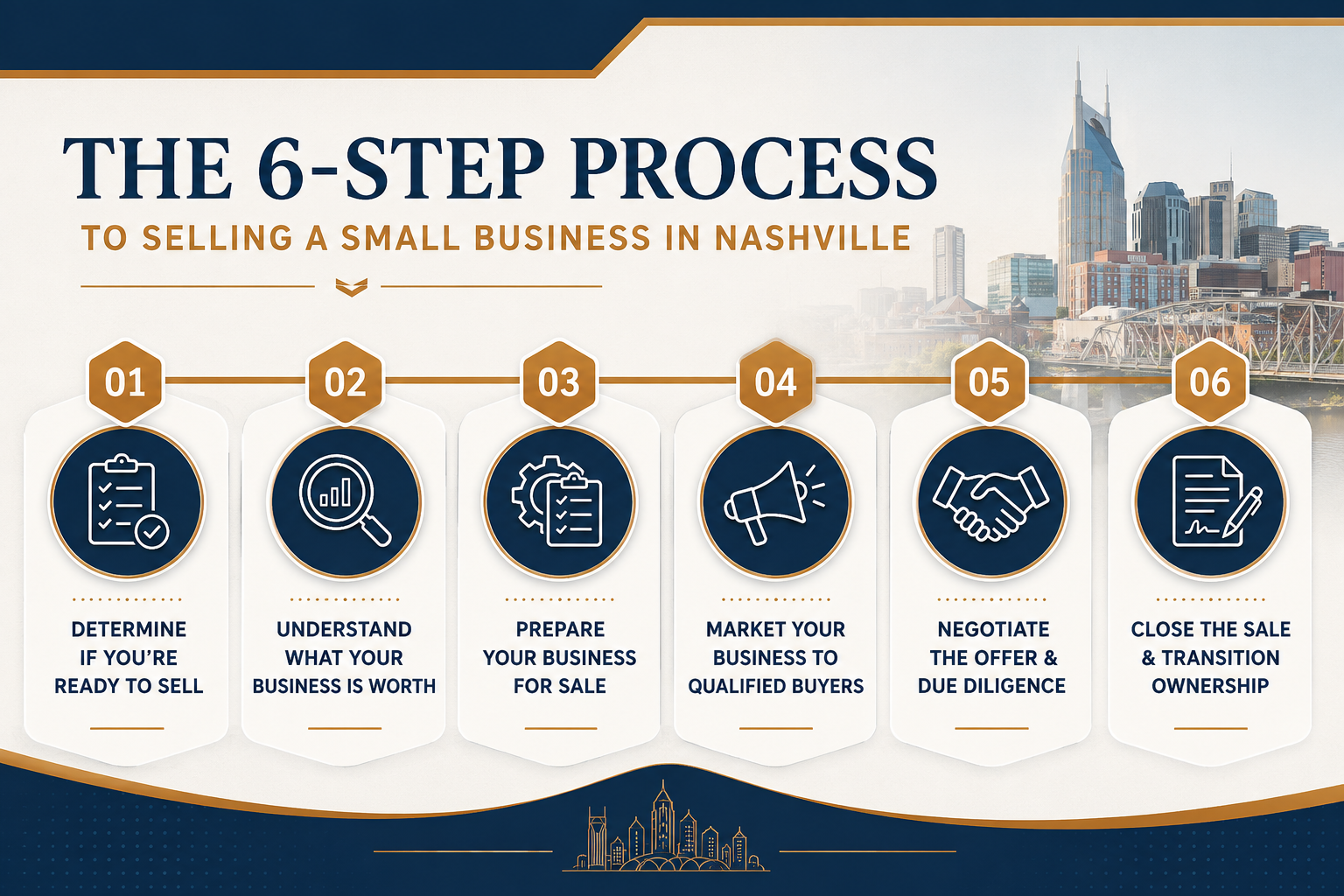
6-Step Guide to Selling a Small Business in Nashville

Selling a business follows a process, and each stage can affect the outcome of the transaction. Decisions made before the business goes on the market often influence buyer interest, negotiations, and the likelihood of reaching a successful closing. The six steps below provide a practical framework to help you prepare your business, work with qualified buyers, and move through the sale process with greater confidence.

Step 1: Determine If You're Ready to Sell

Before thinking about valuation or marketing your business, determine whether both you and the business are ready for an ownership transition. Many owners know they're ready for a change, but buyers will evaluate whether the business can continue operating successfully under new ownership.

Start by defining what you want the sale to accomplish. Your goals will shape decisions throughout the process, including when to sell, what offers to consider, and how involved you're willing to be after closing.

Question to Consider Why It Matters
When do I want to sell? Your timeline determines how much time you have to improve the business before listing it.
What financial outcome do I need? A target helps set realistic expectations for valuation and negotiations.
Am I willing to stay after closing? Many buyers prefer the seller to remain during the transition to help retain employees, customers, and operational continuity.
Besides price, what matters most? Priorities such as deal certainty, employee retention, or preserving your company's legacy can influence which offer is the best fit.

Once you've clarified your goals, evaluate the business through a buyer's perspective. Buyers want to see consistent financial performance, reliable records, documented operating procedures, and a business that isn't dependent on the owner for day-to-day decision-making. Looking at your company objectively can help you identify weaknesses before they become issues during due diligence.

Finally, consider whether any known risks could complicate a transaction. Customer concentration, incomplete financial records, unresolved legal matters, or heavy owner involvement don't always prevent a sale, but they often lead to additional questions, longer negotiations, or lower offers. Addressing these issues before going to market gives buyers fewer reasons to hesitate.

Step 2: Understand What Your Business Is Worth

One of the first questions most business owners ask is, "What is my business worth?" The answer depends on the company's financial performance, growth prospects, and the level of risk a buyer is taking on. Before setting an asking price, it's important to have a realistic understanding of how the market is likely to value your business.

Buyers don't evaluate a business the same way an owner does. They review financial statements, cash flow, customer relationships, operating systems, and how dependent the business is on the current owner. They also consider whether the business can continue performing after the ownership transition.

A professional business valuation brings those factors together to estimate what the business is worth in the current market. It can also highlight issues that may affect buyer interest, allowing you to address them before listing the business for sale.

Keep in mind that a valuation and an asking price aren't always the same. A valuation provides an informed starting point, while the final sale price depends on negotiations, buyer demand, financing, and the overall structure of the deal.

Common misconception: Many owners assume their business is worth what they need for retirement or what a similar business sold for. Buyers don't price businesses that way. They evaluate the specific financial performance, risks, and growth opportunities of the business they're considering.

Read Next: Why Buyers and Sellers Don't Agree on Business Value (and What to Do About It

Step 3: Prepare Your Business for Sale

Once you have a realistic understanding of your business's value, the next step is preparing it for the market. Buyers expect to review more than financial statements. They'll want to understand how the business operates, how risks are managed, and whether the company can continue performing after the ownership transition.

Preparing your business before listing it can reduce delays during due diligence and give buyers greater confidence in the business they're considering. Focus on areas that commonly receive the most attention during a sale:

  • Financial records: Make sure financial statements, tax returns, and other key documents are accurate, complete, and up to date.

  • Business operations: Document important processes so daily operations don't depend on one person's knowledge.

  • Owner dependency: Delegate responsibilities where possible and ensure key employees can continue running the business after closing.

  • Outstanding issues: Resolve known legal, regulatory, or operational concerns before buyers uncover them during due diligence.

Preparation also means viewing your business through someone else's perspective. Buyers are looking for fewer surprises, lower risk, and a smoother ownership transition. A business with organized records and well-documented operations is generally easier to evaluate and transfer than one that relies on informal processes or institutional knowledge.

Read Next: Business Sale Preparation Checklist: A 12-Point Plan to Prepare Your Business For Sale


Step 4: Market Your Business to Qualified Buyers

After preparing your business for sale, the next step is finding the right buyers. While it may be tempting to advertise the business publicly, many sales begin with a confidential marketing strategy designed to protect employees, customers, suppliers, and day-to-day operations.

Before sharing sensitive information, buyers are typically asked to sign a non-disclosure agreement (NDA). This allows you to provide financial and operational details while reducing the risk of confidential information being shared outside the transaction.

Not every interested party is a qualified buyer. Serious buyers should have the financial capacity to complete the purchase and a genuine interest in operating or investing in the business. Screening buyers early helps reduce time spent on unproductive discussions and keeps the sale process moving forward.

An experienced business broker can market your business effectively while maintaining confidentiality throughout the process. Reaching the right audience can generate stronger interest than simply listing the business on a public marketplace.

Marketing your business effectively is about creating competition among qualified buyers while maintaining confidentiality throughout the process. When multiple buyers express serious interest, sellers are often in a stronger position to negotiate favorable terms.

Read Next: Types of Business Buyers in Nashville: Buyer Spotlight with Colin Price

Step 5: Negotiate the Offer and Complete Due Diligence

Receiving an offer is an important milestone, but the purchase price is only one part of the negotiation. Buyers and sellers also need to agree on payment terms, transition support, contingencies, and other conditions before moving toward closing.

After an initial agreement is reached, the buyer typically begins due diligence. This is a detailed review of the business to verify its financial, operational, and legal information before completing the purchase.

Area Examples of What Buyers Review
Financial Records Profit and loss statements, balance sheets, tax returns, bank statements, and supporting financial records
Customers and Revenue Major customer relationships, contracts, recurring revenue, and customer concentration
Operations Standard operating procedures, supplier relationships, inventory, and day-to-day workflows
Employees Organizational structure, key employees, compensation, employment agreements, and benefits
Legal and Compliance Business licenses, permits, leases, contracts, insurance policies, and any pending legal matters

Businesses with organized records and complete documentation generally move through due diligence more efficiently. Missing information or unresolved issues can delay the transaction, lead to additional negotiations, or cause a buyer to reconsider the deal.

Throughout this stage, continue operating the business as usual while responding to information requests promptly. An experienced business broker, attorney, and accountant can also help coordinate the process and keep the transaction moving toward closing.

Read More: How to Save Taxes When Selling a Business (Most Owners Get This Wrong)

Step 6: Close the Sale and Transition Ownership

The final stage is completing the legal transfer of the business and helping the new owner take over operations. Before closing, both parties work through the remaining legal documents, financing requirements, and any conditions outlined in the purchase agreement.

Once the transaction is complete, many sellers remain involved for a short transition period. Depending on the terms of the sale, this may include introducing the new owner to key customers and suppliers, training them on daily operations, or helping ensure a smooth handoff to employees.

A well-planned transition benefits both parties. Buyers gain confidence as they assume ownership, while sellers help preserve customer relationships, maintain business continuity, and reduce the risk of unexpected issues after closing.

Even after ownership changes hands, sellers may have ongoing responsibilities, such as honoring non-compete agreements, providing agreed-upon consulting support, or assisting with post-closing matters outlined in the purchase agreement. Understanding these obligations before closing can help prevent misunderstandings later.

Ready to Sell Your Small Business in Nashville?

Selling a business takes planning, preparation, and informed decision-making. From understanding what your business is worth to preparing for due diligence and negotiating the final agreement, each stage can influence the outcome of the sale.

Whether you're planning to sell in the coming months or a few years from now, starting the process early gives you more time to strengthen your business, address potential concerns, and position it for qualified buyers.

If you're considering selling a small business in Nashville, working with an experienced business broker can help you navigate the process with confidence. At Legacy ETA, we help business owners understand their options, prepare their businesses for the market, and connect with qualified buyers while maintaining confidentiality throughout the transaction.

Contact us today to schedule a confidential consultation and discuss your goals for selling your business.

Ready to Sell Your Small Business in Nashville?


Frequently Asked Questions

How long does it take to sell a business in Nashville?

Every business sale is different, but many small business transactions take three to six months from listing to closing. The timeline depends on factors such as the type of business, buyer demand, financing, and how well prepared the business is before going to market. Gathering financial records, completing a business valuation, and organizing documents early can help keep the process moving.

Read Next: How Long Does It Take to Sell a Business in TN? Valuation, Preparation, and Other Considerations

Do I need a business valuation before selling?

A business valuation isn't legally required, but it's one of the best ways to establish a realistic asking price. It evaluates the company's financial performance, market conditions, and other factors buyers consider when making an offer. A valuation can also identify issues that are worth addressing before you sell your business.

Read More: Why Buyers and Sellers Don't Agree on Business Value (and What to Do About It)

Should I tell my employees that I'm selling the business?

Many owners choose to keep the business sale confidential until the appropriate stage of the transaction. Announcing a sale too early can create uncertainty among employees, customers, and suppliers. Buyers are also typically asked to sign a non-disclosure agreement (NDA) before receiving confidential financial and operational information.

Can I sell my business if I'm ready to retire?

Yes. Retirement is one of the most common reasons owners decide to sell a business. Buyers often look for established companies with consistent financial performance, experienced employees, and stable operations that can transition smoothly to new ownership.

Can I sell my business if I'm still involved in day-to-day operations?

Yes, although heavy owner involvement can affect buyer interest and valuation. Before listing the business, consider documenting key processes, delegating responsibilities, and reducing owner dependency where practical. These steps can make the business easier to transfer during the closing process.

What documents do buyers usually request during due diligence?

The due diligence process often includes reviewing financial statements, three years of tax returns, customer and supplier contracts, employee information, leases, licenses, and other legal and financial records. Having these documents organized before receiving a letter of intent (LOI) can help avoid delays later in the transaction.

Do I need a business broker to sell a business in Nashville?

You can sell a business in Nashville without a broker, but many owners choose to work with one because the process involves valuation, confidential marketing, buyer screening, negotiations, due diligence, and coordinating with attorneys and a CPA. An experienced business broker can help manage the process of selling while allowing you to stay focused on running the business.

Read More: Nashville Business Broker Guide: How to Choose the Right Fit

Due Diligence Checklist for Sellers: How to Prepare Your Business for Buyers

Due Diligence Checklist for Sellers: How to Prepare Your Business for Buyers

A due diligence checklist for sellers identifies the financial, legal, tax, and operational records a buyer will examine before purchasing a...

Read More
5 Things That Actually Drive Your Roofing Company's Sale Price (and 3 That Don't)

5 Things That Actually Drive Your Roofing Company's Sale Price (and 3 That Don't)

Your roofing company's sale price comes down to one question a buyer is always asking: how much money will this business make me, and how confident...

Read More
What Is SDE? The Number Buyers Actually Use to Price Your Small Business

What Is SDE? The Number Buyers Actually Use to Price Your Small Business

SDE stands for Seller's Discretionary Earnings. It is the total financial benefit a single owner-operator receives from a business in a year. It...

Read More