


How to Save Taxes When Selling a Business (Most Owners Get This Wrong)
If you're preparing to sell your business, your focus is probably on price.
5 min read
Joseph Steigman : Updated on April 6, 2026
If you are looking to sell your business in Nashville, TN, one of the biggest questions is not just what your business is worth. It is also about who is the right buyer. That question matters more than many business owners expect.
In fact, according to McKinsey, 44% of M&A leaders say lack of cultural fit and friction between buyer and seller are the top reasons integrations fail. That highlights a critical point: choosing the right type of buyer is not just about closing a deal. It is about what happens after the sale.
In my work as a business broker and advisor, I often hear owners ask who the buyers are, what they want, and whether selling to an individual buyer is really different from selling to private equity or a strategic acquirer. That is why conversations like this one with Colin Price are valuable. He represents a type of buyer many owners say they want: someone who plans to operate the business, learn from the seller, and hold it for the long term.
Many business owners assume the best outcome is simply the highest purchase price. In reality, seller priorities are often broader. Some want maximum cash at closing. Others care about preserving their management team, protecting their customer base, and ensuring continuity after selling the business.
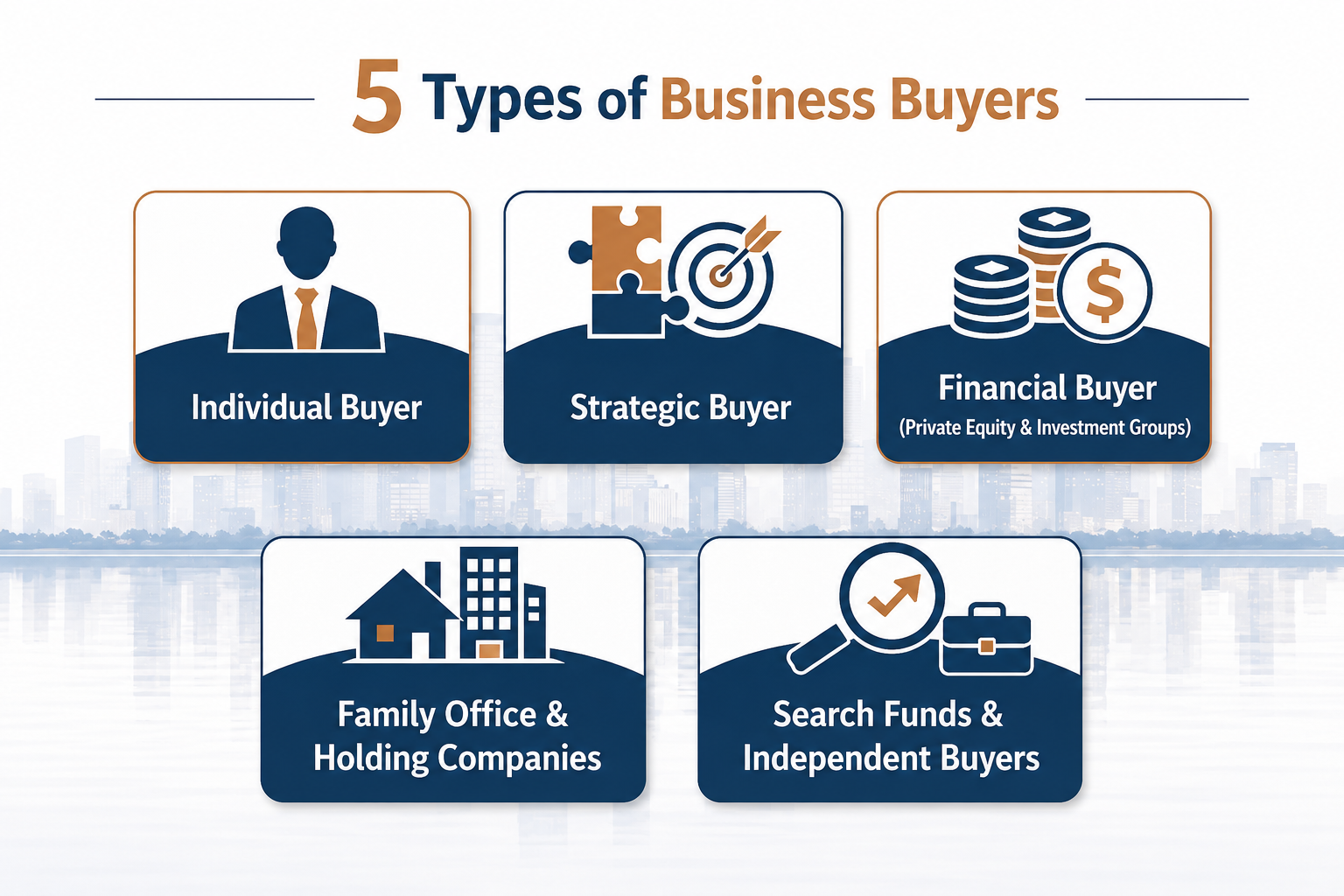
That is why identifying the right buyer matters. If you plan to sell your business, you should consider which type of buyer aligns with your goals:
These are some of the most common types of business buyers, and each comes with different expectations around growth potential, investment horizon, and operational involvement.
Colin Price represents a growing category of business buyers: the individual buyer with an operator mindset.
He is an entrepreneur with a background in leadership and operations. His experience includes military service, business education, and hands-on management. What makes his perspective valuable is his focus on running the business, not just acquiring it.
Many buyers of businesses today come from search fund or independent sponsor backgrounds. These buyers are often looking to acquire businesses they can operate long-term rather than flip quickly.
Colin’s approach reflects that.
His interest in acquisition was shaped by watching his father build and sell a business. That experience highlighted how important buyer type is during business sales. Sellers are not just evaluating financial resources. They are evaluating who will operate the business and carry it forward.
When preparing to sell your business, it is critical to understand the different types of buyers for your business. Each buyer type approaches valuation, risk, and growth differently.

An individual buyer is often an entrepreneur looking to buy a business and operate it directly. These buyers typically focus on stable cash flow, manageable operations, and long-term ownership. They often work closely with the seller during transition and value learning the business from the existing owner.
A strategic buyer is usually a competitor or company in a related industry. Strategic buyers often acquire other companies to increase market share, expand their customer base, or create synergy. A strategic buyer may be willing to pay a premium if your business strengthens their position in the market or offers a synergistic advantage.
Financial buyers are investors focused on generating a return on investment. This includes private equity firms, family offices, and other institutional investors.
Private equity groups often acquire businesses with strong profitability and growth potential. A private equity firm may use leverage, operational improvements, and scaling strategies to generate returns. Unlike an individual buyer, financial buyers may not operate the business directly. Instead, they rely on the management team or bring in leadership.
Family offices and holding companies are another type of financial buyer. These groups often have longer investment horizons and may prioritize stability and consistent cash flow over rapid growth. They can be a strong fit for business owners who want continuity and long-term stewardship.
Search fund buyers are entrepreneurs backed by investors who raise capital specifically to acquire businesses. These buyers typically target smaller businesses with strong cash flow and a history of profitability. They often intend to operate the business themselves and grow it over time.
One of the most common concerns sellers have is whether a buyer without industry experience can successfully operate the business.
Colin’s perspective highlights that while industry knowledge matters, transferable skills also play a major role. Leadership, financial management, and operational discipline are critical to running the business effectively. Buyers know they must learn quickly, rely on the existing team, and often build advisory support. A strong transition period helps bridge any knowledge gaps.
When evaluating different types of potential buyers, it helps to understand how each approaches an acquisition.
Each buyer type has different priorities. Choosing between them depends on your goals, timeline, and desired outcome.
Many business owners assume that private equity or strategic buyers will always pay more.
In reality, buyers are typically using similar valuation frameworks based on cash flow, risk, and growth potential. While a strategic buyer may be willing to pay a premium in some cases, many buyers converge around similar pricing structures.
The best deal is not always the highest price. Terms, certainty, and alignment often matter more.
If you are preparing to sell your business, consider more than just financial terms. Evaluate:
The right buyer is one who aligns with your priorities and understands the value of your business.
The type of buyer you attract can influence the value of your business and the success of your sale.
A well-prepared business with strong cash flow, clear financials, and documented systems attracts more qualified buyers. Buyers will often pay more when they see stability, growth potential, and reduced risk.
Strategic buyers often look for synergy. Financial buyers focus on returns. Individual buyers focus on operating the business successfully. Understanding these dynamics helps you position your business effectively.
If you want to sell your business successfully, preparation matters. To attract the right buyers:
When you prepare your business for sale, you increase your chances of attracting the right buyer and achieving a smoother transaction.
If you are thinking about selling your business in Nashville, TN, understanding the different types of business buyers is critical.
The right buyer is not always the one offering the highest price. It is the one who aligns with your goals, values your business, and can successfully operate it after closing. Choosing the right buyer can make the difference between a stressful sale and a successful transition.
If you want to better understand your options, evaluate different buyer types, and prepare your business for a successful sale, you can explore Legacy ETA’s step-by-step guide to selling a business.
Interested in connecting with an individual buyer like Colin Price?
Contact Colin at colin@pinebrooklegacy.com
or visit www.pinebrooklegacy.com
Want to explore your options and identify the right buyer for your business?
Contact Joe Steigman at joe@legacy-eta.com
or call 615-240-7901
If you're preparing to sell your business, your focus is probably on price.
If you are looking to sell your business in Nashville, TN, one of the biggest questions is not just what your business is worth. It is also about who...
If you are thinking, “I want to sell my business in Nashville”, one of the smartest things you can do is get your company buyer-ready with a CFO...