

Selling a Restaurant in Tennessee: A Practical Guide
Selling a restaurant is one of the most significant decisions an owner can make. Whether you’re ready to retire, pivot to a new business, or simply...
2 min read
Joseph Steigman : Updated on February 23, 2026
When a business owner hits a turning point — whether that’s scaling up, stepping away, or preparing for a sale — the next hire can dramatically shape the outcome.
But how do you decide who to bring in?
Should you hire a manager to run day-to-day operations and lead the team?
Or do you need to hire sales leadership to build pipelines, coach your team, and drive revenue?
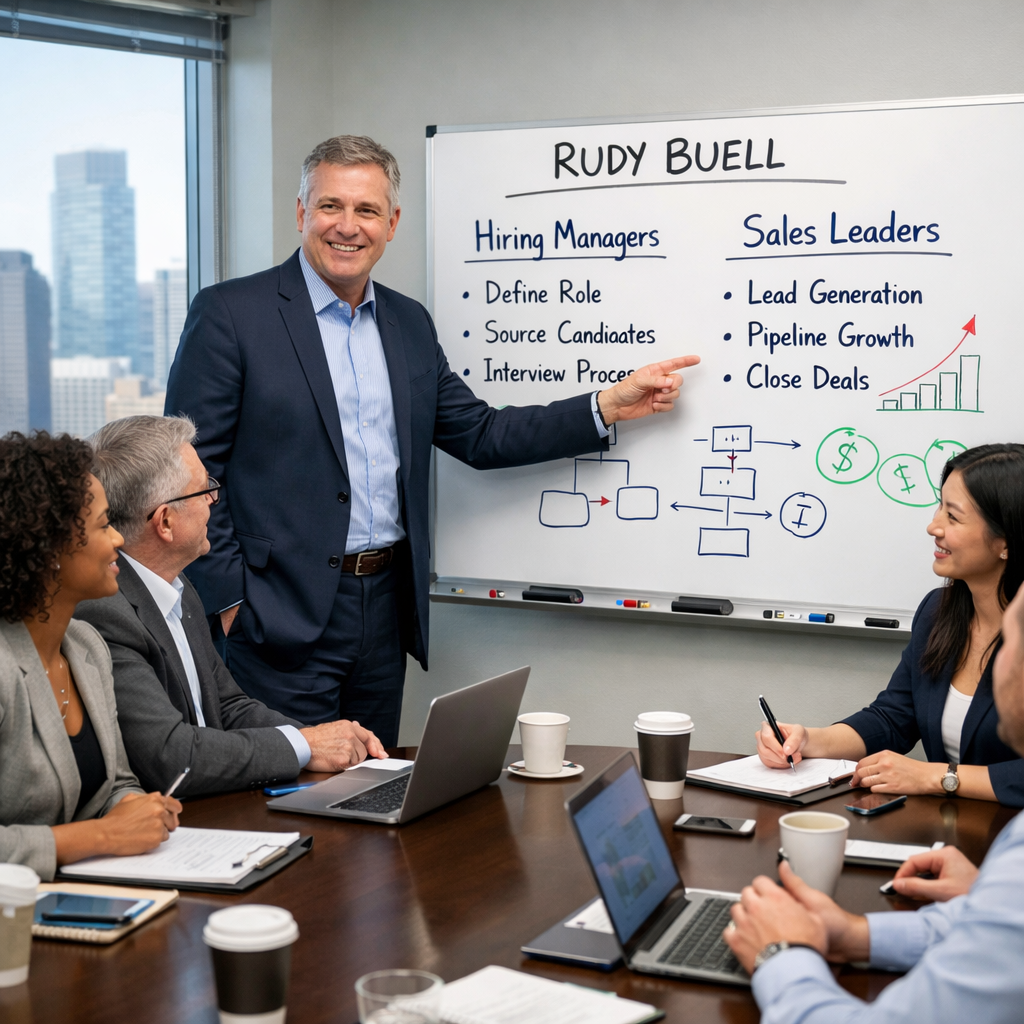
To help answer this, I sat down with Rudy Buell, a sales expert with Sales Xceleration, a firm that provides fractional sales leadership for small to mid-sized businesses. Rudy works directly with business owners to diagnose sales issues, install repeatable systems, and grow revenue — often increasing sales by over 30% during an engagement.
Together, we reviewed six real-world scenarios I frequently encounter as a business broker and advisor. Here’s how we break down who to hire — and when.
Problem: Partners who excel at service delivery are now responsible for driving revenue — and struggling.
Solution: Hire a Fractional Sales Leader like Rudy Buell to coach, implement BD systems, and build a repeatable sales process. These firms often lack a structured sales approach, and a sales leader can create the foundation needed for consistent growth.
Problem: Marketing is generating leads, but the sales team isn’t converting.
Solution: Depends on where the gap is.
Hire a Sales Director or Fractional Sales Leader (Rudy’s sweet spot) to coach, improve CRM usage, and manage performance.
Or hire a General Manager if the challenge involves integrating sales with ops, scheduling, and follow-through. Roofing companies often need both sales and operations aligned to close deals and complete projects smoothly.
Problem: Smart tech experts, but they can’t sell effectively.
Solution: Hire a Fractional Sales Leader from a group like Sales Xceleration. Rudy noted that while IT teams know their products, they often struggle to communicate business value. Sales coaching and systems development can turn technical talk into closed deals.
Problem: Great product, but no infrastructure to support growth.
Solution: Hire a General Manager who understands how to scale operations in sync with increased sales activity. Rudy pointed out that while sales growth is critical, manufacturing companies often stall if operations can’t keep up — creating customer dissatisfaction and harming reputation. In these cases, a GM ensures capacity grows with demand.
Problem: Owner wants to exit in a few years and maximize value.
Solution: Hire a General Manager to reduce owner dependence and ensure operational continuity — a major value driver for buyers. Rudy and I both agree that buyers want evidence the business can run without the owner. A GM in place supports that transferability, which directly improves valuation.
In many cases, especially in more complex or growth-oriented businesses, the best move is to hire a manager to run day-to-day operations and hire sales leadership to drive top-line revenue.
As Rudy emphasized, Sales Xceleration often comes in to build the sales engine — but when paired with strong operational leadership, the results are long-term and transformative.
As a business broker, I know buyers don’t just evaluate top-line revenue — they assess how stable and transferable that revenue is without the current owner.
Hiring a GM demonstrates operational resilience.
Hiring a fractional sales leader shows there’s a process behind your sales growth — not just hustle.
When both are in place, buyers see a business that runs smoothly, grows predictably, and transitions cleanly.
That’s what earns premium valuations.
Whether you’re growing, stepping back, or planning to sell, the right leadership hire makes all the difference. I help small business owners in Tennessee and beyond make strategic hires that improve value and reduce day-to-day dependency.
Selling a restaurant is one of the most significant decisions an owner can make. Whether you’re ready to retire, pivot to a new business, or simply...
If you’re considering selling your business but concerned about the tax hit, you’re not alone. Many business owners hesitate to exit because of the...
When a business owner hits a turning point — whether that’s scaling up, stepping away, or preparing for a sale — the next hire can dramatically shape...