


10 min read

Business Broker Nashville, TN: Why Local Expertise Wins Every Time

Business Broker Nashville, TN: Why Local Expertise Wins Every Time

In 2024, Tennessee recorded approximately 73,757 new business filings statewide and more than 361,000 business renewals, reflecting a highly active and dynamic marketplace where many companies open, close, or transition ownership each year.

Many owners, whether to buy or sell, wonder if a local business broker in Nashville, TN, really makes a difference compared to a national listing platform.

This guide covers:

  • How local brokers deliver higher valuations and faster sales in Tennessee
  • The step-by-step process a Nashville business broker uses to protect your interests
  • What to expect when comparing local vs national brokerage options
  • How to prepare for a successful valuation and maximize your outcome

P.S. Legacy Entrepreneurs is a Nashville-based business brokerage firm specializing in confidential, one-on-one advisory for Tennessee business owners. Our team of experienced advisors works directly with you to deliver market-based valuations, qualified buyer vetting, and a step-by-step process from valuation through closing.

If you’re looking to sell your business or want to explore your options, speak with a Tennessee Broker today.

TL;DR: Local Broker Advantage at a Glance

Decision Area Actionable Guidance/What to Do Next
Local vs National Broker Verify the broker’s local track record, references, and presence in the Nashville area before listing your business.
Local Market Knowledge Ask for recent comparable sales and market data specific to your industry and region to ensure accurate valuation.
Confidentiality Require a clear NDA process and ask how the broker screens buyers to protect your business identity and staff.
Buyer Vetting Confirm the broker’s process for qualifying buyers and their access to a local network of serious, funded prospects.
Fee Structures Request a written breakdown of all fees, including retainer and success commission, and compare the flexibility offered.
Regulatory/Legal/Financing Ask about experience with Tennessee-specific legal, tax, and SBA financing requirements and local referral partners.
Preparing for Consultation Gather financials, leases, and contracts; clarify your goals; and prepare questions for your first broker meeting.
Post-Sale Transition Discuss how the broker supports transition planning and ensures a cultural fit with local buyers after closing.


Local vs National Business Brokers: What Really Changes for TN Business Owners

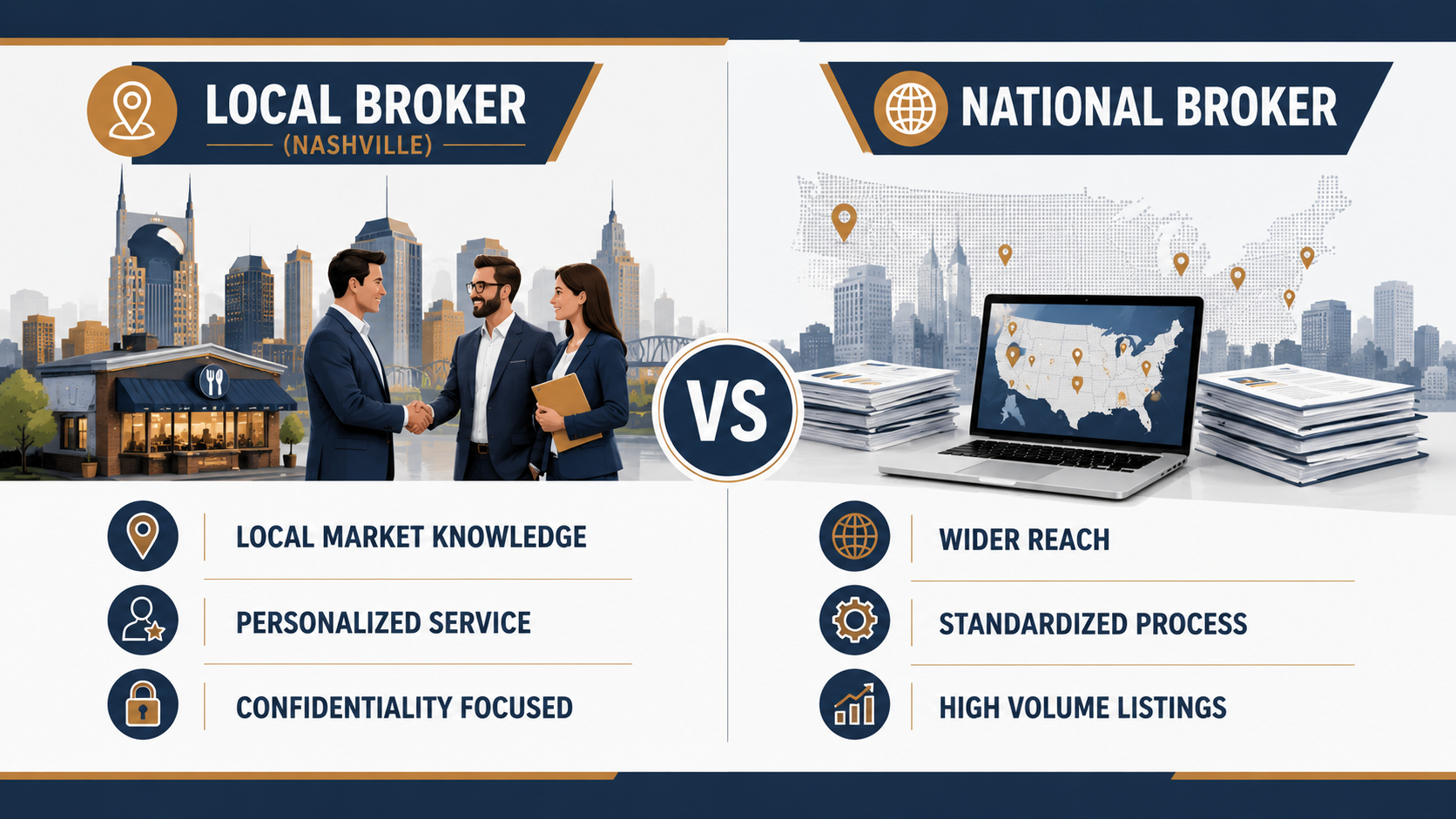
Local vs National Business Brokers

Business owners must evaluate how a broker’s approach, resources, and relationships will shape the outcome of their sale. Local Nashville business brokers operate with direct knowledge of the area’s buyer pool, economic conditions, and regulatory environment.

National listing platforms, by comparison, rely on broader networks and standardized processes. The differences between these models influence how buyers are sourced, how confidentiality is maintained, and how negotiations are managed. Owners who understand these distinctions can make more informed decisions about which path aligns with their goals and risk tolerance.

Service Scope and Accountability

Local brokers in Nashville, TN, provide hands-on, one-on-one advisory throughout the entire sales process. You work directly with a seasoned advisor who understands the local market and is invested in your outcome. This relationship is built on trust, confidentiality, and a shared commitment to your goals.

A local broker’s accountability shows up in several ways. They are available for in-person meetings, site visits, and direct communication throughout the transaction. You can expect regular updates, clear explanations of each step, and a single point of contact who knows your business and your objectives. This level of involvement helps prevent miscommunication, delays, and the feeling of being “just another listing.”

They also have a reputation to uphold in the Nashville business community. Their success depends on referrals and long-term relationships, so they are motivated to deliver results and protect your interests. When challenges arise, a local broker can respond quickly, coordinate with local professionals, and keep the process moving forward.

Local Market Knowledge and Valuation Accuracy

Understanding the local market is critical for setting the right price and attracting the right buyers. Local brokers use data from recent sales in the region, not just national averages or automated formulas.

  • Comparable Sales Analysis: Local brokers review actual sales of similar businesses in your area, ensuring your valuation reflects what buyers are really paying in the current market. This prevents overpricing or undervaluing your business, which can stall or kill a deal.
  • Regional Trend Awareness: They track local economic indicators, industry shifts, and buyer demand, ensuring your business is positioned to attract the right buyers at the right time. For example, a surge in demand for service businesses in Franklin or Murfreesboro can directly impact your sale strategy.
  • Valuation Support: Local brokers can explain every component of your business valuation, from cash flow adjustments to asset appraisals, and provide documentation to back up their numbers. This transparency builds trust with buyers and helps you defend your asking price.
  • Industry-Specific Insights: They understand the unique value drivers for different sectors in Tennessee, such as licensing requirements for restaurants or customer concentration for service businesses.
  • What to Ask: Request examples of recent deals in your industry and region, and ask how the broker arrived at their valuation for your business. A strong broker will have this information ready.

Confidentiality and Buyer Vetting

Confidentiality is one of the most important concerns for business owners considering selling. In Tennessee, where business communities are often close-knit, a leak can quickly impact employee morale, customer relationships, and even vendor contracts. Local brokers have established protocols to protect your identity and sensitive information throughout the selling process, using a combination of personal relationships and proven systems.

  • Screening Process: Local brokers require buyers to sign NDAs and provide proof of funds before sharing sensitive information, protecting your business from competitors and unqualified inquiries. This step is often skipped or poorly enforced by national sites.
  • Controlled Marketing: They use confidential, targeted outreach rather than public listings, reducing the risk of leaks to employees, customers, or vendors. This is especially important in smaller communities where word travels fast.
  • Buyer Qualification: Brokers in Nashville maintain a vetted pool of local buyers, including entrepreneurs, investors, and strategic acquirers who are actively looking to buy a business in Tennessee. This network increases the chances of a successful, confidential sale.
  • Verification Steps: Ask your broker to outline their confidentiality protocols and provide examples of how they’ve protected other business owners during the sales process. A reputable broker will have clear answers and documented procedures.

Negotiation and Deal Structuring

Negotiating a business sale in Tennessee requires a clear understanding of local buyer expectations, current market data, and the specific priorities of both parties. Local brokers use their relationships and experience in the Nashville area to identify what buyers value most, such as recurring revenue, established management teams, or documented growth potential.

They draw on recent comparable transactions to support pricing and terms, ensuring that offers reflect the realities of the local market.

Fee and Commission Structures

Fee structures can vary widely between local and national brokers, and understanding what you’re paying for is essential for maximizing your net proceeds. Local brokers in Nashville, TN often offer more flexibility in both retainer and success fees, while national brokers tend to use standardized, less negotiable fee schedules.

Note: These figures are averages and may vary depending on the size and complexity of your business sale.

Fee Component Local Broker (Nashville, TN) National Broker/Listing Site What to Compare/Ask
Retainer $2,000–$10,000 (often negotiable) $10,000–$30,000+ (less flexible) Is the retainer credited at closing?
Success Commission 8%–12% (sometimes up to 15%) 10%–15% or tiered (Lehman Formula) What’s included in the commission?
Fee Flexibility Case-by-case, based on deal size Standardized, less room to negotiate Can fees be adjusted for your deal?
Services Included Full advisory, buyer vetting, closing Listing, basic support, add-ons What’s covered vs extra?


Regulatory, Legal, and Financing Nuances in Tennessee

Business sales involve several state, county, and municipal requirements that can affect the timeline and structure of a deal. Local brokers are familiar with licensing rules, tax obligations, and compliance standards specific to selling businesses. They anticipate potential regulatory hurdles and prepare documentation in advance, which helps prevent delays during due diligence.

In addition to legal expertise, local brokers maintain relationships with area lenders and SBA specialists. This network allows them to connect buyers with financing options that are well-suited to Tennessee businesses.

Nashville business brokers may also coordinate with local attorneys and CPAs to ensure that contracts, tax filings, and closing documents meet all state and local requirements. Owners should ask prospective brokers about their experience with Tennessee-specific transactions and their ability to assemble a team of trusted professionals for each stage of the sale.

Post-Sale Transition and Buyer Fit

An enterprise sale does not end with simply a monetary transaction. The transition period after a business sale is critical for both the seller and the new owner. Local brokers focus on matching sellers with buyers who have the skills, resources, and local understanding needed for acquisition and to continue the business’s success. They facilitate introductions to key employees, customers, and vendors, and help plan a transition period that supports operational continuity.

Ongoing support from the broker can include coordinating training, answering post-sale questions, and helping resolve any issues that arise as the new owner takes over. This involvement helps protect the seller’s reputation and ensures that the business remains stable during the handoff.

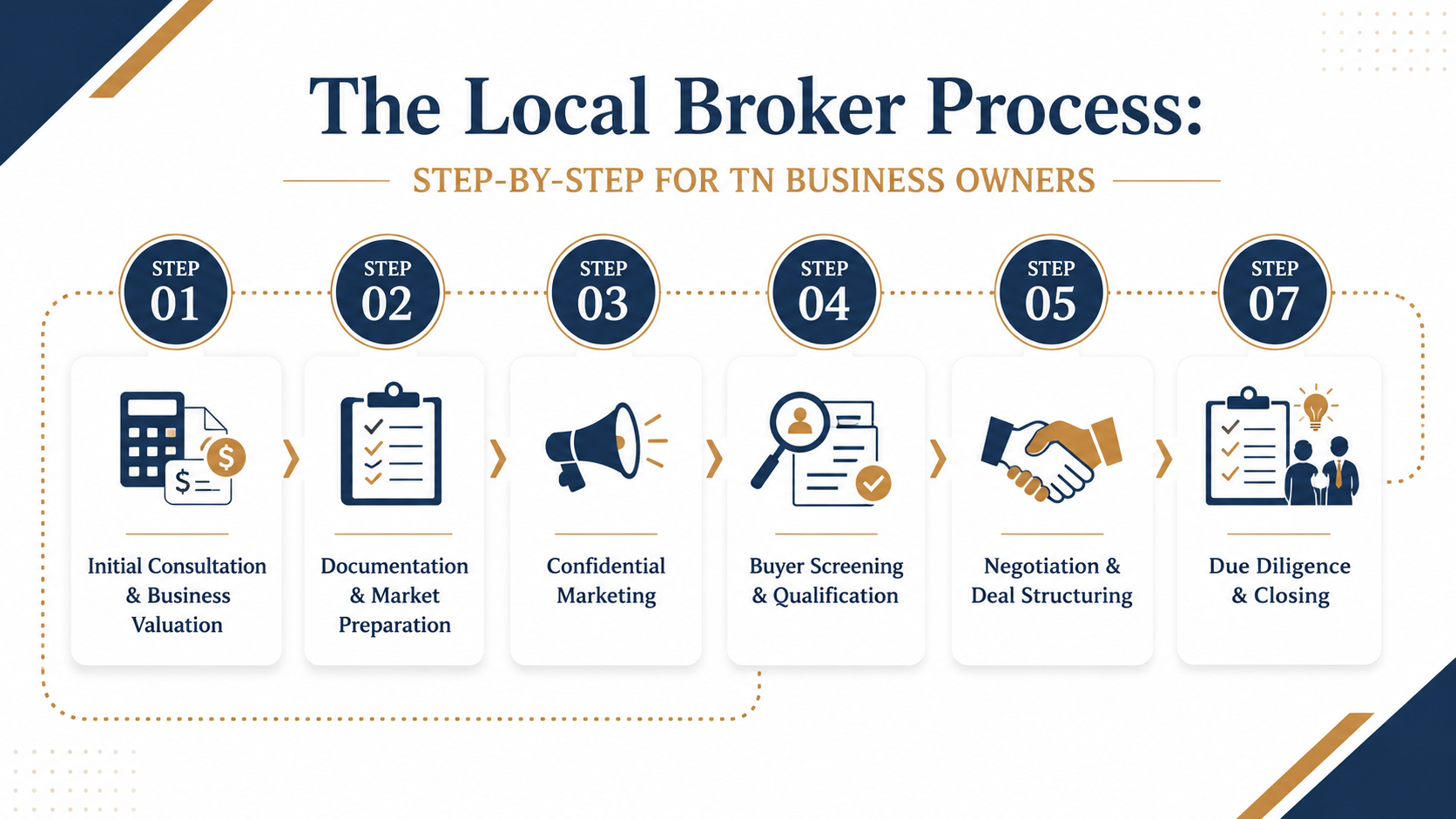
The Local Broker Process: Step-by-Step for TN Business Owners

The Local Broker Process-1

Selling a business in Tennessee involves a series of coordinated steps, each designed to protect the owner’s interests and support a successful outcome. A local broker guides the process from the initial review through closing and transition, providing expertise and hands-on support at every stage.

Initial Consultation and Business Valuation

Understanding where you stand is the first step to selling your business. A local broker will meet with you confidentially to discuss your goals, review your business’s financials, and assess its market position. You will have more clarity with a grounded, market-based assessment using local comparable and industry trends.

  • Clarify your goals: Are you looking to retire, start a new venture, or simply step back from daily operations? Your broker will help you define what success looks like.
  • Review financials: The broker will analyze your profit and loss statements, tax returns, and cash flow to determine the true earning power of your business.
  • Assess market readiness: They’ll identify strengths and weaknesses that could impact value or buyer interest, and recommend improvements before going to market.
  • Set expectations: You’ll receive a realistic valuation range and a timeline for the sales process, based on actual deals in the Nashville area.

Documentation and Market Preparation

Preparation is essential for attracting qualified buyers and supporting a smooth transaction. The broker assists in gathering and organizing all necessary documents, such as leases, contracts, employee records, and vendor agreements. They are well-versed in identifying any gaps or compliance issues early, allowing time for resolution before the business is presented to buyers.

A key part of this phase is documenting add-backs, such as owner benefits or one-time expenses, to present a clear picture of the business’s earning power. The broker also prepares a confidential information memorandum that highlights the business’s strengths and growth opportunities, providing buyers with the information they need to make informed decisions while protecting sensitive details.

Confidential Marketing

Marketing a business for sale in Tennessee requires a targeted and discreet approach. The broker develops a profile of the ideal buyer and uses their local network to reach out to individuals and organizations with a genuine interest in the business.

Blind profiles are used to describe the opportunity without revealing the business’s identity until a buyer is qualified and has signed a non-disclosure agreement.

Buyer Screening and Qualification

Throughout this process, the broker manages inquiries, screens potential buyers for financial capability and experience, and ensures that only serious prospects move forward. Local brokers have a rigorous process to ensure only qualified buyers get access to sensitive information or site visits.

  • Require NDAs: Every buyer must sign a non-disclosure agreement before receiving detailed information.
  • Verify financial capability: Buyers must provide proof of funds or lender pre-approval to demonstrate they can complete the transaction.
  • Assess experience and fit: The broker evaluates whether the buyer has the background and motivation to run your business successfully.
  • Schedule confidential meetings: Only after passing these checks will buyers be invited to meet you or tour the business.

Negotiation and Deal Structuring

Negotiations focus on achieving terms that reflect the business’s value and the owner’s goals. The broker presents offers, explains the implications of each, and works with both parties to address concerns and clarify expectations. Price, payment structure, transition period, and contingencies are all negotiated based on local market data and the specific needs of the buyer and seller.

Legal agreements are drafted in collaboration with local attorneys to ensure that all terms are enforceable and compliant with Tennessee law. The broker maintains clear communication and tracks deadlines to keep the process moving forward.

Due Diligence and Closing

The due diligence phase involves a thorough review of the business’s operations, finances, and legal standing. Local brokers coordinate with your advisors and the buyer’s team to ensure a smooth closing.

  • Facilitate due diligence: The broker manages document requests, site visits, and Q&A sessions, keeping the process organized and confidential.
  • Resolve issues: Any last-minute concerns—legal, financial, or operational—are addressed quickly with input from local experts.
  • Coordinate closing logistics: The broker ensures all paperwork is signed, funds are transferred, and legal requirements are met.
  • Celebrate the sale: Once the deal closes, you receive your proceeds and can move on to your next chapter.

Post-Sale Transition Support

A good broker’s job doesn’t end at closing. Local brokers help you and the buyer transition smoothly, protecting your legacy and relationships.

  • Plan the handoff: The broker coordinates introductions to key employees, customers, and vendors.
  • Support training: They help structure a transition period so the buyer can learn the business needs and maintain continuity.
  • Address post-sale questions: If issues arise after closing, your broker remains available to help resolve them.
  • Protect your reputation: The broker ensures the transition is handled professionally, so your legacy in the Nashville business community remains strong.

Local Broker Referral Networks: CPAs, Attorneys, and Lenders

A successful business sale in Tennessee requires more than just a broker. Local brokers in Nashville TN maintain strong referral networks with area CPAs, attorneys, and lenders. These relationships are critical for navigating the legal, tax, and financing complexities of selling a business in Tennessee.

When you work with a local broker, you gain access to professionals who understand the nuances of Tennessee law, SBA financing, and local tax codes. This network can speed up the sales process, reduce risk, and ensure that every aspect of your transaction is handled by experts who know the local landscape. Ask your broker about their referral partners and how they coordinate with your existing advisors to keep the process seamless.

Choosing the Right Broker: Credentials, Experience, and Fit

Selecting the right business broker is one of the most important decisions you’ll make as a Tennessee business owner. The right broker can mean the difference between a smooth, profitable sale and a frustrating, drawn-out process. Here’s what to look for and how to compare your options:

Evaluation Area What to Look For/Ask How to Verify Why It Matters
Certifications IBBA, M&A Source, state licenses Request proof of certification and check with the issuing body Ensures ethical standards and up-to-date knowledge
Track Record Recent deals in TN, industry experience Ask for references and deal summaries Demonstrates ability to close similar transactions
Specialization & Network Focus on your business type, strong local connections Review broker’s listings and network partners Increases buyer pool and deal quality
Communication & Fit Direct, responsive, transparent Schedule interviews and assess responsiveness Reduces miscommunication and builds trust
Fee Structure & Scope Clear breakdown, flexibility, all-included services Request a written fee agreement Prevents surprises and aligns incentives
Referral Partners Local attorneys, CPAs, and lenders Ask for introductions or a partner list Speeds up the process and ensures local compliance


For a deeper dive into broker selection, read The Ultimate Guide to Choosing a Business Broker in Tennessee.

Local Expertise as the Foundation for a Successful Sale

Selling your business in Tennessee is a decision that affects your finances, your employees, and your legacy. Local brokers in Nashville, TN bring the market knowledge, personal accountability, and network of trusted professionals that national listing sites simply can’t match.

  • Local brokers deliver higher valuations and faster sales by leveraging regional data and relationships.
  • Confidentiality and buyer vetting are stronger with a broker who knows the Tennessee market and its players.
  • The right broker provides step-by-step support, from valuation through closing and post-sale transition.

Legacy Entrepreneurs specializes in helping Tennessee business owners successfully navigate the sales process with direct, confidential, and market-driven advisory. Speak with a Tennessee broker to start your exit conversation, maximize the value of your business, and move forward with confidence.

FAQs: Nashville Business Brokers

What is the main benefit of hiring a local business broker in Nashville?

Local brokers deliver higher valuations, faster sales, and better confidentiality through hands-on, market-specific expertise. They know the local buyer pool, understand regional trends, and can position your business for the strongest outcome.

How do local brokers protect confidentiality during a sale?

Local brokers use NDAs, blind profiles, and targeted outreach to qualified buyers, minimizing leaks to staff or competitors. They control the flow of information and only share details with buyers who have been thoroughly vetted.

What should I bring to my first broker consultation?

Bring financials, leases, contracts, and a list of your goals and questions for the broker. The more prepared you are, the faster the broker can provide a realistic valuation and exit strategy.

How do fees compare between local and national business brokers?

Local brokers often offer more flexible, negotiable fees, while national brokers use standardized, higher fee structures. Always request a written fee breakdown and ask what services are included.

What role do local brokers play in buyer vetting?

They screen buyers for financial capability, experience, and fit, ensuring only serious buyers for your company access your information. This protects your confidentiality and increases the chances of a successful sale.

How do I know if a broker is right for my business?

Look for certifications, local experience, industry specialization, and a communication style that fits your needs. Interview multiple brokers and check references before making a decision.

Selling a Restaurant in Tennessee: A Practical Guide

Selling a Restaurant in Tennessee: A Practical Guide

Selling a restaurant is one of the most significant decisions an owner can make. Whether you’re ready to retire, pivot to a new business, or simply...

Read More
Structured Installment Sales: A Smarter Way to Sell Your Business and Reduce Capital Gains

Structured Installment Sales: A Smarter Way to Sell Your Business and Reduce Capital Gains

If you’re considering selling your business but concerned about the tax hit, you’re not alone. Many business owners hesitate to exit because of the...

Read More
Should You Hire a Manager or a Sales Leader? 6 Real Scenarios That Show the Right Move

Should You Hire a Manager or a Sales Leader? 6 Real Scenarios That Show the Right Move

When a business owner hits a turning point — whether that’s scaling up, stepping away, or preparing for a sale — the next hire can dramatically shape...

Read More