


9 min read

Exit Planning for Tennessee Business Owners

Exit Planning for Tennessee Business Owners

Most business owners have the majority of their wealth tied up in their business, yet many wait until a triggering event or burnout to start planning their exit. This delay can lead to rushed decisions, lower offers, and missed opportunities to optimize value.

Early planning, ideally 2–3 years before selling, can dramatically increase the value of your business and reduce the risk of failed deals. Owners who start early have more options, stronger negotiating power, and a smoother transition to their next chapter.

This guide covers:

  • How to build a 2–3 year exit plan that protects business value
  • The step-by-step exit planning process for Tennessee business owners
  • Key exit strategies and ownership transfer options explained
  • Common mistakes and how to avoid regret after the sale

P.S. Legacy Entrepreneurs works directly with Tennessee business owners to develop custom exit strategies, provide certified business valuations, and guide owners through every step of the exit planning process. Our one-on-one advisory model ensures you have a seasoned advisor by your side from initial planning through closing, with no handoffs or generic solutions.

Book an exit strategy call if you want to understand the value of your business, explore your exit options, or start planning for a successful transition.

TL;DR: Your 2–3 Year Exit Planning Roadmap

Phase/Decision Area What to Do and How to Verify
Start Early (2–3 Years Out) Schedule a certified business valuation, clarify personal/financial goals, and review business structure with your CPA and attorney. Early action gives you time to fix risks and maximize value.
Owner Dependency & Succession Identify all decisions that rely on you, then transfer authority to managers or key employees. Operate under this structure for at least 12 months to prove transferability.
Financial Documentation Reconcile 24+ months of P&Ls to tax returns, document add-backs, and organize contracts, leases, and HR files in a secure data room. Confirm with your CPA before sharing with buyers.
Value Optimization Address customer concentration, renegotiate key contracts, and implement systems for recurring revenue. Track improvements monthly and document results for buyers.
Exit Strategy Selection Evaluate third-party sale, family transfer, ESOP, or key employee buyout. Assess fit based on your goals, business structure, and tax impact. Consult with a certified exit planning advisor.
Go-to-Market Preparation Build a buyer profile, prepare a confidential information memorandum, and vet buyers for financial strength and fit. Maintain confidentiality throughout.
Diligence & Negotiation Respond to buyer requests with organized documentation, clarify deal terms, and plan for a transition period. Keep leverage by anticipating buyer concerns.
Avoiding Regret Review your plan with your advisory team, update your estate and tax plan, and ensure your financial needs are met post-exit. Don’t rush—early planning prevents costly mistakes.


Why Early Exit Planning Protects Value

According to a recent survey, many business owners know they have to start succession planning, but 45% say they're too busy, and 63% say it's too early, leaving value on the table. Having an early exit plan in place gives you time to address risks, improve financial reporting, and align your business and personal goals. It also allows you to explore multiple exit strategies, rather than being forced into a single option due to time pressure.

Owners who plan are more likely to achieve financial security, protect their legacy, and ensure a smooth transition for employees and customers.

The Exit Planning Process

Exit planning is not a one-time event, but a multi-year process that requires coordination between your business, personal, and financial goals. The most successful exits begin 2–3 years before the intended sale or transition.

This timeline allows you to identify and address risks, optimize value drivers, and prepare your business to stand up to buyer scrutiny. Each year has a distinct focus, and skipping steps can lead to delays, price reductions, or even failed deals.

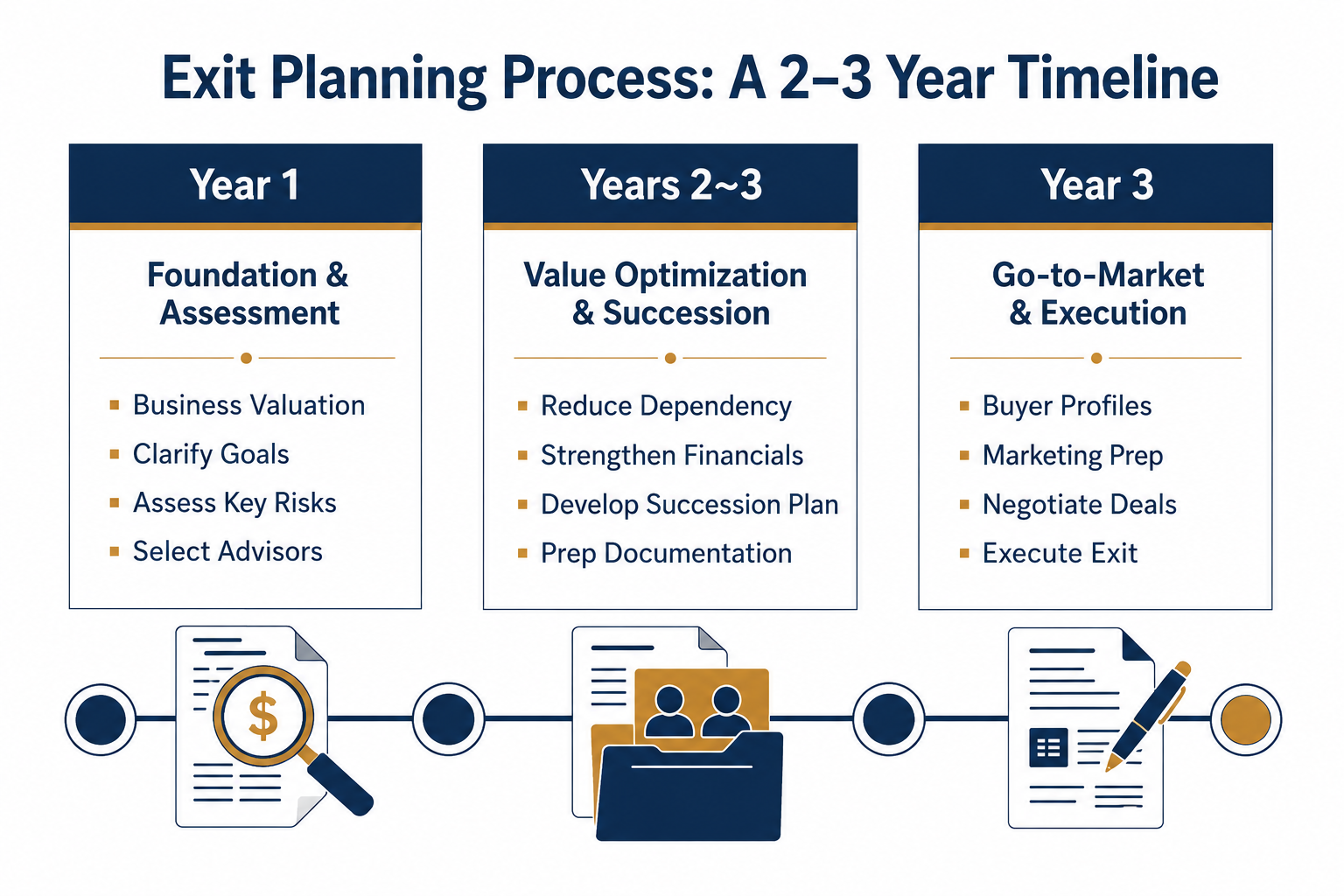
Year 1 – Foundation and Assessment

The first year of exit planning is about building a strong foundation. Owners need to understand what their business is worth, clarify their personal and financial goals, and identify risks that could derail a future sale. This is also the time to assemble your advisory team and review your business structure for tax and legal efficiency.

  • Business valuation: Obtain a certified, market-based business valuation to establish a realistic baseline. This helps you make informed decisions and set expectations for your exit.
  • Owner goals: Define your financial needs, retirement timeline, and legacy objectives. Align these with your business exit plan to avoid conflicts later.
  • Business structure review: Work with your CPA and attorney to ensure your company’s legal and tax structure supports a sale or transfer. Address any issues with ownership, buy-sell agreements, or succession plans.
  • Key risk assessment: Identify areas of owner dependency, customer concentration, and documentation gaps. These are the most common reasons buyers discount value or walk away.
  • Advisor selection: Choose a certified exit planning advisor, financial advisor, and attorney who has experience with business transitions. Look for professionals who understand both business and personal planning.

For a detailed example of a certified valuation, see the Business Valuation-EXAMPLE.

Year 2 – Value Optimization and Succession

With the foundation in place, the second year focuses on making your business more attractive to buyers and reducing risks that could lower your business value. This is also when you develop a succession plan for key employees or family members.

  • Value drivers: Improve financial reporting accuracy, reduce owner dependency by delegating key decisions, and strengthen contracts with customers and vendors. These steps increase the value of your business and make it more appealing to potential buyers.
  • Succession plan: Identify and develop key employees or family members who could take on leadership roles. Document their responsibilities and provide training to ensure a smooth transition.
  • Tax and estate planning: Coordinate with your financial advisor and attorney to implement tax-efficient strategies for the sale or transfer of your business. Update your estate plan to reflect your exit goals.
  • Documentation: Build a secure data room with organized financials, contracts, leases, and HR records. This preparation speeds up due diligence and reduces the risk of last-minute surprises.
  • For guidance on hiring a general manager to reduce owner dependency, review the Guide to Hiring a General Manager.

Year 3 – Go-to-Market and Execution

The third year is when you prepare to bring your business to market, execute your plan, and, finally, exit your business. This phase requires careful coordination to maintain confidentiality, attract qualified buyers, and negotiate favorable terms.

Buyer Profiling and Marketing Preparation

Before listing your business, define the ideal buyer profile. whether it’s a third-party, family member, ESOP, or key employee. Prepare a confidential information memorandum that highlights your business’s strengths, financial performance, and growth opportunities. Vet potential buyers for financial strength and cultural fit, maintaining confidentiality throughout the process.

Negotiation Readiness and Diligence

Anticipate buyer questions and prepare to respond with organized documentation. Clarify your deal structure preferences, including price, terms, and transition period. Plan for a transition period where you support the new owner to ensure business continuity. Keeping leverage during negotiation depends on your ability to address buyer concerns quickly and confidently.

Closing and Transition

Work closely with your advisory team to finalize the sale, transfer ownership, and execute your transition plan. Update your estate and tax plan to reflect the outcome of the sale. Ensure your financial needs are met post-exit and that your business legacy remains intact.

For a real-world example of a strong confidential information memorandum, see the EXAMPLE: Confidential Information Memorandum.

Table – 2–3 Year Exit Planning Timeline

A well-structured exit planning timeline helps owners stay on track and avoid costly mistakes. The table below outlines the key actions, verification steps, and consequences for each phase of the process.

Timeline Phase Action Required How to Verify What Happens If Skipped
Year 1: Foundation Certified valuation, goal setting, structure review, and advisor selection Written valuation report, documented goals, legal review, signed advisor agreements Unrealistic expectations, missed tax savings, lack of direction
Year 2: Optimization Improve reporting, reduce owner dependency, create a succession plan, and data room Monthly financials, delegated authority, succession documentation, and organized files Lower business value, buyer skepticism, delayed diligence
Year 3: Go-to-Market Buyer profiling, CIM prep, buyer vetting, negotiation readiness Buyer list, completed CIM, NDA tracking, deal structure summary Fewer qualified buyers, confidentiality breaches, weaker negotiation position
Closing & Transition Finalize sale, ownership transfer, update estate/tax plan Signed purchase agreement, transition checklist, updated legal docs Post-sale regret, tax inefficiency, legacy risk


Exit Strategies and Ownership Transfer Options

Exit planning strategies have unique benefits, risks, and tax implications. The best option depends on your goals, business structure, and the needs of your family or key employees.

Understanding these options early allows you to develop a plan that aligns with your financial and personal objectives.

Third-Party Sale

A third-party sale involves selling your business to an outside buyer, such as a competitor, private equity group, or individual investor. This option often delivers the highest price but requires strong financial documentation, operational independence, and a clear value proposition. Owners should prepare for extensive due diligence and be ready to support the transition for several months after closing.

Family Succession

Transferring your business to a family member can preserve your legacy and keep the business in the family. However, it requires careful planning to address fairness, tax implications, and the readiness of the next generation. Open communication and a documented succession plan are essential to avoid conflict and ensure business continuity.

Employee Stock Ownership Plan (ESOP)

An ESOP allows employees to acquire ownership in the business over time. This strategy can reward loyal employees, provide tax advantages, and create a gradual transition for the owner. ESOPs are complex and require specialized legal and financial expertise, but they can be a powerful tool for owners who want to exit gradually while maintaining company culture.

Key Employee Buyout

Selling to a key employee or management team can ensure continuity and reward those who have contributed to the business’s success. This option often involves seller financing or earn-outs, so owners must assess the financial strength and commitment of the buyers. A clear buy-sell agreement and transition plan are critical.

Liquidation

Liquidating the business involves selling assets and winding down operations. This is usually the least desirable option, as it often results in lower proceeds and can impact employees and customers. Liquidation may be appropriate if the business is no longer viable or if other exit strategies are not feasible.

Integrating Business, Personal, and Estate Planning

A successful exit plan aligns your business transition with your personal financial security, retirement, and estate goals. Many business owners overlook the importance of integrating these areas, leading to tax surprises or unmet financial needs after the sale. Early coordination with your advisory team ensures that your exit supports both your business and personal objectives.

  • Estate plan: Update wills, trusts, and beneficiary designations to reflect your exit and succession plan. This protects your family and ensures your wishes are honored.
  • Tax planning: Work with your CPA and attorney to implement strategies that minimize capital gains and transfer taxes. Consider charitable giving or gifting strategies if appropriate.
  • Financial planning: Assess your income needs post-exit and develop an investment plan to preserve and grow your wealth. Ensure you have adequate liquidity for retirement and other goals.
  • Family business considerations: Balance fairness among family members with the need for business continuity. Document your intentions and communicate openly to prevent misunderstandings.

For more on aligning business and personal planning, the Guide to Selling Your Business offers practical steps for Tennessee owners.

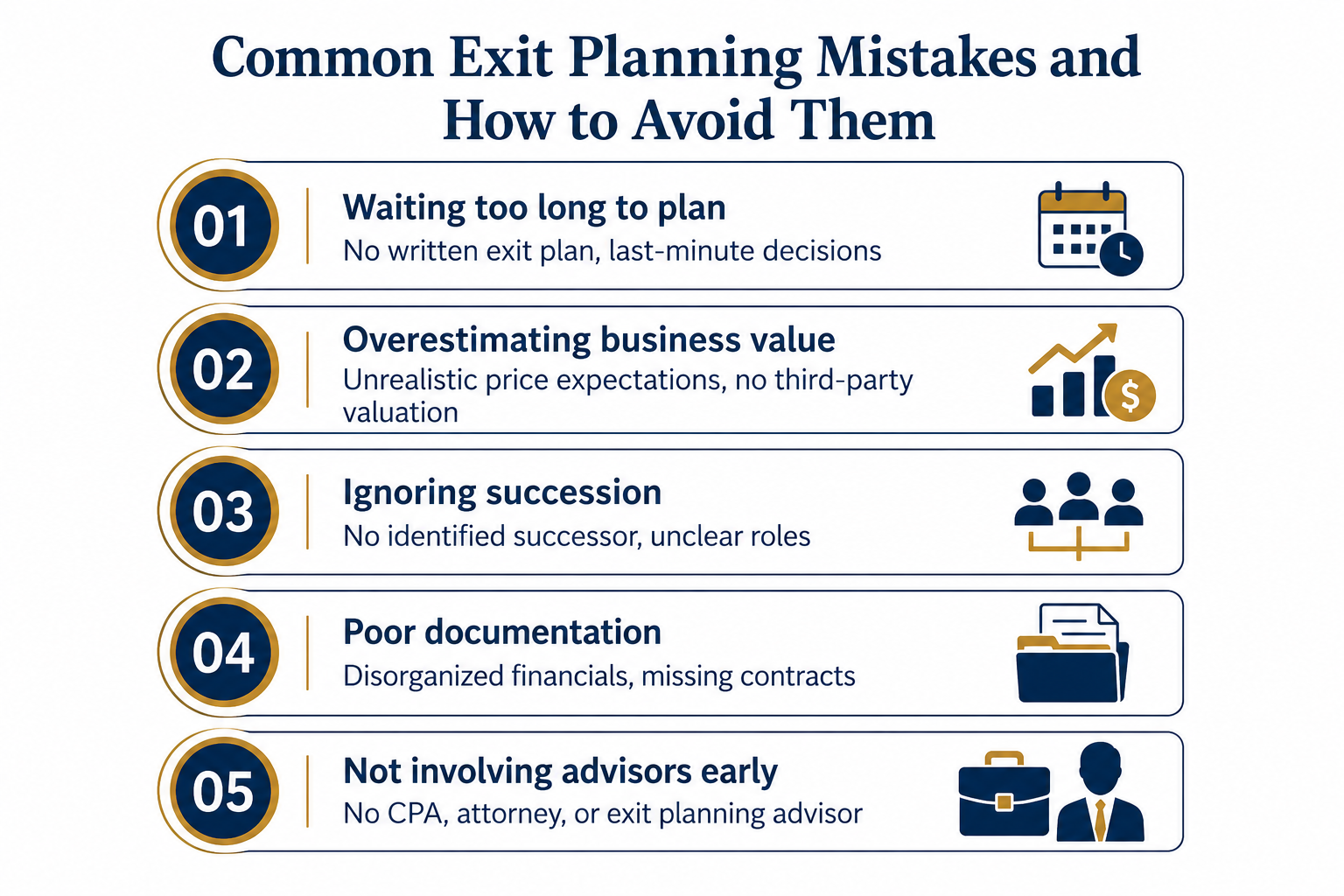
Common Exit Planning Mistakes and How to Avoid Them

Common Exit Planning Mistakes and How to Avoid Them

Many business owners make avoidable mistakes that reduce the value of their business or complicate the exit process.

Mistake How to Spot Consequence How to Fix
Waiting too long to plan No written exit plan, last-minute decisions Lower offers, limited options, regret Start planning 2–3 years out, document your plan
Overestimating business value Unrealistic price expectations, no third-party valuation Failed sales, wasted time Get a certified, market-based valuation
Ignoring succession No identified successor, unclear roles Business disruption, family conflict Develop and document a succession plan
Poor documentation Disorganized financials, missing contracts Delayed diligence, price reductions Build a secure data room, reconcile records
Not involving advisors early No CPA, attorney, or exit planning advisor Missed tax savings, legal risk Assemble your advisory team at the start


Working with Advisors: Building Your Exit Team

A thoughtful exit planning process requires a team of experienced advisors who understand both business and personal planning. Here are some tips to pick the right advisor to help you determine the value of your business, develop a plan that meets your goals, and avoid costly mistakes.

  • Advisor roles: A certified exit planning advisor coordinates the process, your CPA ensures financial accuracy and tax efficiency, your attorney manages legal structure and contracts, and your financial advisor aligns the exit with your personal goals.
  • Red flags: Avoid advisors who lack experience with business transitions, push generic solutions, or fail to communicate clearly. Look for professionals who take time to understand your unique situation.
  • Coordination: Keep all advisors informed and aligned with your goals. Regular meetings and clear documentation prevent miscommunication and ensure a smooth process.

If you want to see how a direct, one-on-one advisory relationship works, the Sell Your Business resource explains the Legacy Entrepreneurs’ approach.

From Planning to Execution: Securing Your Legacy

A successful exit is the result of years of thoughtful planning, not a last-minute scramble. Owners who start early, assemble the right advisory team, and align their business and personal goals are more likely to achieve financial security and protect their legacy. The steps you take today will shape your options, your negotiating power, and your peace of mind when it’s time to exit the business.

  • Start your exit planning now: Schedule a certified valuation, clarify your goals, and assemble your advisory team.
  • Document and delegate: Build a secure data room, transfer key responsibilities, and operate under your future structure.
  • Review and update: Regularly revisit your plan, update your estate and tax strategies, and keep your advisors aligned.

Legacy Entrepreneurs specializes in high-integrity exit strategies for Main Street and mid-market business owners, providing certified valuations and guiding you through every step of the exit planning process. Book an exit strategy call to start building your plan for a successful exit.

FAQs

What is the ideal timeline for exit planning?

Most experts recommend starting your exit planning process 2–3 years before you intend to sell or transfer your business. This allows time to address risks, optimize value, and align your business and personal goals.

How do I determine what my business is worth?

A certified, market-based business valuation is the best way to determine business value. This process analyzes your financials, market conditions, and risk factors to provide a realistic estimate.

What are the most common exit strategies for business owners?

The main exit strategies include third-party sale, family succession, employee stock ownership plan (ESOP), key employee buyout, and liquidation. The right option depends on your goals, business structure, and financial needs.

How can I reduce owner dependency before selling?

Start by delegating key decisions and responsibilities to managers or key employees. Document processes and operate under this structure for at least a year to demonstrate transferability to buyers.

What role do advisors play in exit planning?

Advisors help you develop a plan, optimize value, manage legal and tax issues, and guide you through the sale or transfer process. A certified exit planning advisor coordinates the team and keeps the process on track.

What are the biggest mistakes to avoid in exit planning?

Waiting too long to plan, overestimating business value, ignoring succession, poor documentation, and not involving advisors early are the most common mistakes. Early, thoughtful planning prevents these issues.

Selling a Restaurant in Tennessee: A Practical Guide

Selling a Restaurant in Tennessee: A Practical Guide

Selling a restaurant is one of the most significant decisions an owner can make. Whether you’re ready to retire, pivot to a new business, or simply...

Read More
Structured Installment Sales: A Smarter Way to Sell Your Business and Reduce Capital Gains

Structured Installment Sales: A Smarter Way to Sell Your Business and Reduce Capital Gains

If you’re considering selling your business but concerned about the tax hit, you’re not alone. Many business owners hesitate to exit because of the...

Read More
Should You Hire a Manager or a Sales Leader? 6 Real Scenarios That Show the Right Move

Should You Hire a Manager or a Sales Leader? 6 Real Scenarios That Show the Right Move

When a business owner hits a turning point — whether that’s scaling up, stepping away, or preparing for a sale — the next hire can dramatically shape...

Read More