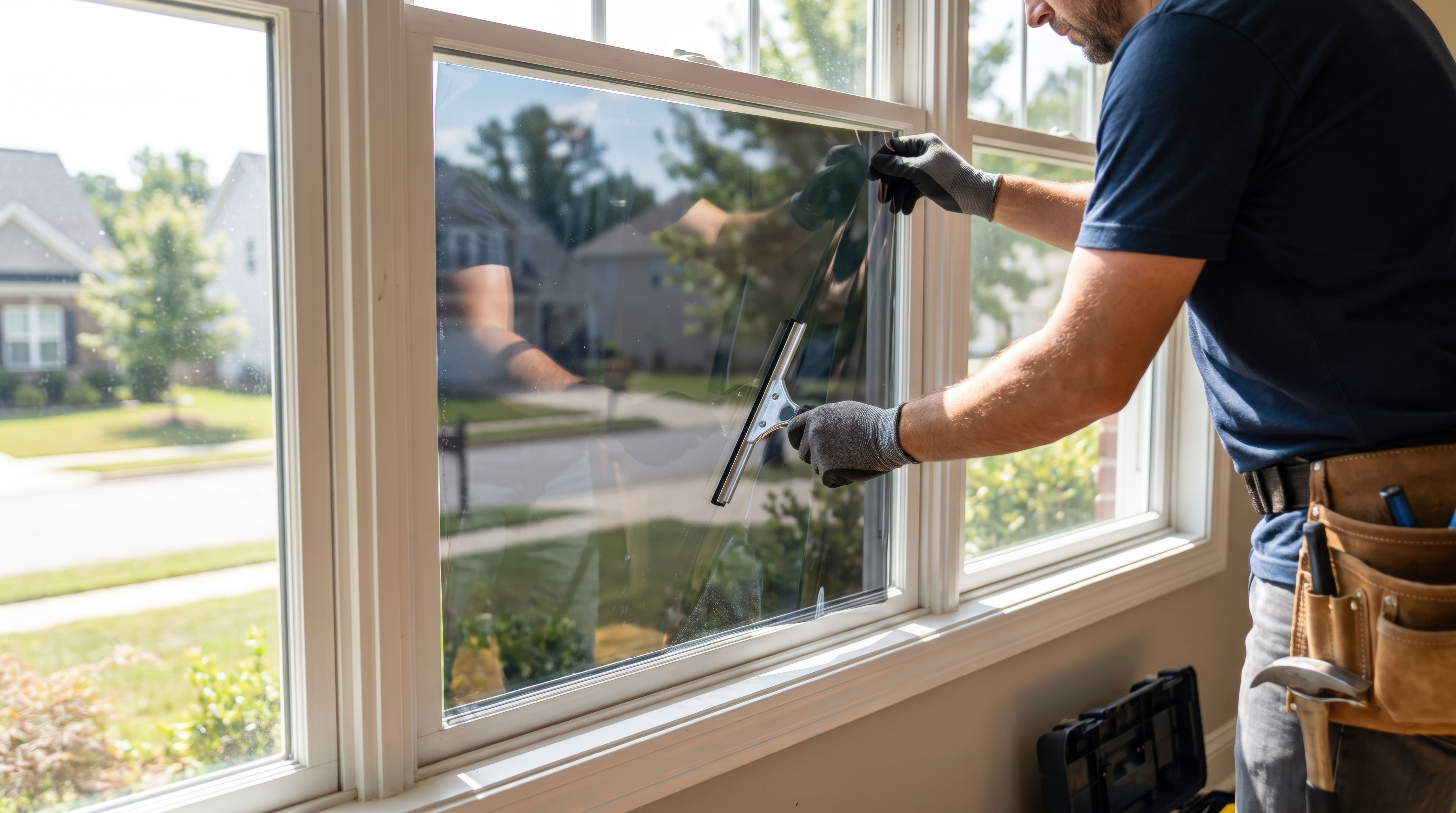
Window tint and film businesses can attract interest from individual buyers, strategic operators, and service-business investors because they combine skilled installation work with strong local demand, repeat customers, referral relationships, and opportunities across automotive, residential, and commercial markets.
But two tint businesses with similar revenue can receive very different reactions from buyers. Profitability, service mix, lead sources, technician depth, reputation, customer concentration, operating systems, and dependence on the owner can all influence perceived risk and ultimately affect valuation.
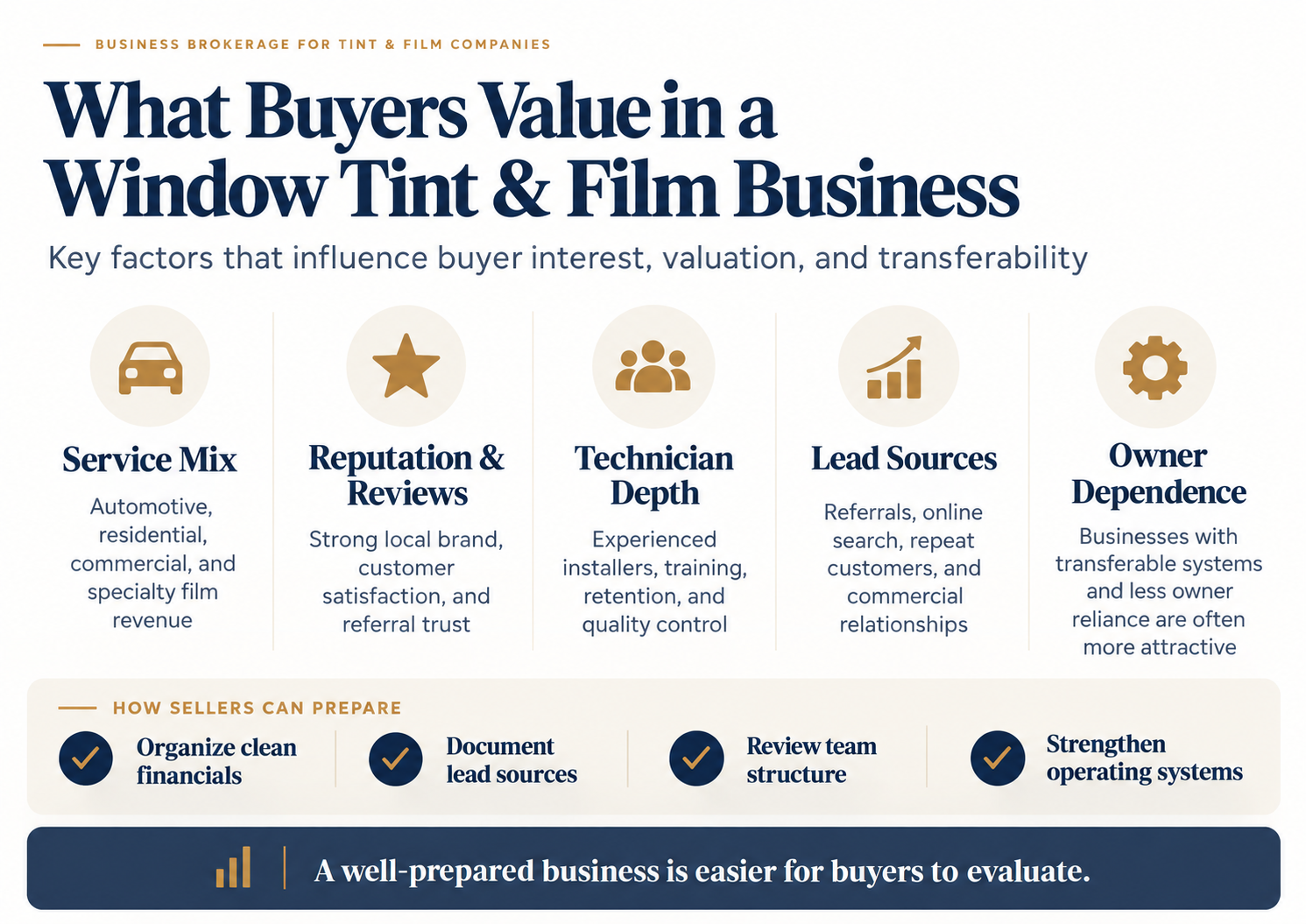
What matters most? Buyers are generally looking for a business that can continue generating leads, completing installations, maintaining quality, and serving customers after the owner exits. Strong reputation, trained technicians, diversified services, reliable lead flow, and documented systems can make a tint and film company easier to evaluate and potentially easier to transfer.
What Drives the Value of a Window Tint & Film Business?
Buyers rarely evaluate a window tint business based on revenue alone. They want to understand the quality and durability of those earnings, how customers find the company, how work is delivered, and whether the business can continue performing at the same level after ownership changes.
Profitability and Installation Margins
Buyers may review gross margins, labor costs, film and material costs, pricing, rework, warranty claims, overhead, and profitability by service type. Clean financial records and consistent margins help buyers understand the company's true earning capacity.
Service Mix
A tint and film business may generate revenue from automotive tint, paint protection film, commercial architectural film, residential film, security film, decorative applications, or related services. Buyers may evaluate how diversified the revenue base is and which service lines produce the strongest margins.
Lead Sources and Referral Relationships
Buyers want to understand how new business is generated. Referrals, online search, repeat customers, auto dealers, body shops, property managers, contractors, architects, commercial accounts, and other relationships can all contribute to demand.
Businesses with multiple repeatable lead sources may appear more transferable than companies that depend heavily on the owner's personal network.
Reputation and Reviews
Reputation can directly affect lead generation and pricing power in the tint industry. Buyers may review online reviews, referral activity, customer satisfaction, warranty history, rework, and how consistently the company delivers a quality installation experience.
Technician Skill and Retention
Experienced installers can be one of the most important assets in a window tint or film business. Buyers may evaluate technician tenure, productivity, compensation, certifications, training, specialty skills, and whether key employees are likely to remain after a sale.
Commercial Accounts and Customer Concentration
Relationships with dealers, contractors, property managers, fleet operators, builders, and commercial customers can provide recurring work. Buyers may review how much revenue comes from the largest accounts and whether those relationships belong to the company or primarily to the owner.
Facility and Installation Capacity
Shop layout, installation bays, climate-controlled workspace, parking, storage, equipment, location, and lease terms can affect operating capacity and customer experience. Buyers may also consider whether the facility can support continued growth.
Supplier and Product Relationships
Buyers may review film suppliers, product lines, dealer or installer programs, purchasing terms, inventory practices, product warranties, and whether any important supplier relationships must be transferred or reapproved after closing.
Operating Systems
Scheduling, estimating, quoting, customer follow-up, inventory management, quality control, warranty handling, marketing, and bookkeeping systems can make the business easier to operate and more transferable.
Owner Dependence
Many tint businesses are built around owners who perform installations, handle estimates, manage key relationships, answer sales inquiries, purchase materials, and supervise quality.
Buyers generally prefer businesses where those responsibilities are distributed across trained employees and supported by documented systems.
What Do Buyers Look for in a Window Tint & Film Business?
Different buyers may prioritize different characteristics, but many of the same questions tend to appear during valuation, buyer screening, and due diligence.
| Buyer Focus | What They May Review | Why It Matters |
|---|---|---|
| Financial Performance | Revenue, normalized earnings, margins, labor, materials, and overhead | Helps buyers assess sustainable earning power. |
| Service Mix | Automotive, commercial, residential, specialty film, and related services | Shows how diversified and scalable the revenue base may be. |
| Lead Generation | Referrals, digital marketing, dealer relationships, repeat customers, and commercial accounts | Shows whether future demand can continue after ownership changes. |
| Technicians | Tenure, skill level, productivity, compensation, and training | Indicates whether installation capacity can remain stable. |
| Reputation | Reviews, referrals, warranties, rework, and customer satisfaction | Can influence both demand and buyer confidence. |
| Operations | Scheduling, quoting, inventory, suppliers, facility, and quality control | Helps buyers assess transferability and scalability. |
| Owner Role | Sales, installation, key relationships, purchasing, and daily operations | Helps determine transition risk and post-closing support needs. |
Window Tint & Film Businesses for Sale
Established tint and film businesses can appeal to buyers when they combine skilled technicians, reliable lead flow, strong local reputation, diverse service offerings, and documented operating systems.
Established Window Tint & Film Company
Established tint operation serving automotive and commercial customers with trained installers, strong referral activity, and diversified sources of demand.
Commercial & Residential Film Contractor
Established architectural film business serving commercial properties and residential customers with trained installers and repeat referral relationships.
How to Prepare a Window Tint & Film Business for Sale
Many of the issues buyers identify during due diligence are easier to address before the business goes to market. Preparing early gives you time to organize financial records, document relationships, evaluate your team, and reduce unnecessary dependence on the owner.
- Organize financial records. Prepare clean profit-and-loss statements, balance sheets, tax returns, payroll records, and supporting schedules.
- Understand profitability by service. Review margins across automotive tint, commercial film, residential film, specialty applications, and related services.
- Document lead sources. Identify how much work comes from referrals, online marketing, repeat customers, dealers, contractors, property managers, and commercial accounts.
- Review customer concentration. Understand whether one dealer, contractor, commercial customer, or referral partner represents an outsized share of revenue.
- Document your technicians. Prepare information on tenure, compensation, skills, certifications, productivity, and key responsibilities.
- Review supplier relationships. Organize information on film manufacturers, product lines, purchasing terms, warranties, and installer programs.
- Document operating systems. Organize quoting, scheduling, inventory, installation procedures, customer follow-up, warranty handling, and quality-control processes.
- Clarify the owner's role. Identify which sales, installation, purchasing, relationship, and management responsibilities depend on you.
Planning to Sell Your Window Tint Business?
Get the practical guide to preparing your financials, understanding what buyers evaluate, identifying potential buyer types, and getting your tint or film business ready for market.
What Does the Sale Process Look Like?
Every transaction is different, but most window tint and film business sales follow a similar sequence. Understanding the process before going to market can help you prepare for buyer questions and make better decisions.
1. Define Your Exit Goals
Start with the outcome you want to achieve, including timing, financial objectives, employee considerations, transition expectations, and your desired role after closing.
2. Understand the Business's Value
Review earnings, service mix, lead sources, reputation, technicians, customer concentration, supplier relationships, operating systems, and owner dependence.
3. Prepare the Business for Market
Organize financial records, customer information, technician details, supplier relationships, facility information, and operating documentation before serious buyers begin their review.
4. Market the Opportunity Confidentially
A controlled process helps protect employees, customers, supplier relationships, and sensitive financial information while qualified buyers are identified.
5. Negotiate and Complete Due Diligence
Buyers will typically review financial, operational, employee, customer, supplier, facility, legal, and other information before moving toward closing.
6. Close and Transition
Final agreements are completed and ownership transitions to the buyer. Depending on the transaction, the seller may remain involved for a defined period to transfer customer relationships, supplier knowledge, operating responsibilities, and installation processes.
Considering Selling Your Window Tint & Film Business?
Legacy ETA helps business owners understand value, prepare for the market, identify qualified buyers, and navigate the transaction from initial planning through closing.
Talk With Legacy ETAHow Is a Window Tint & Film Business Valued?
Valuation typically begins with normalized earnings and then considers the quality, durability, and transferability of those earnings. There is no single multiple that applies to every window tint or film company.
Buyers may evaluate profitability, service mix, customer concentration, technician stability, reputation, lead generation, commercial relationships, facility capacity, supplier relationships, growth opportunities, and owner dependence.
Important: Revenue alone does not determine value. Buyers are ultimately evaluating the cash flow they expect the business to generate after the transaction and the risks associated with maintaining that cash flow.
Recently Sold Window Tint & Film Businesses
Window tint and film transactions can vary depending on the company's service mix, local reputation, customer base, technician depth, referral channels, operating systems, and owner involvement.
Automotive Window Tint Company
Strong local brand, repeat referral demand, experienced installers, and an established customer-acquisition process.
Commercial Film Installation Business
Established commercial relationships, trained technicians, diversified projects, and a consistent pipeline of installation work.
Multi-Service Tint & Film Company
Diversified automotive, residential, and commercial revenue supported by a trained team and documented operating systems.
How Legacy ETA Helps Window Tint & Film Business Owners
Selling a privately held tint or film business involves valuation, preparation, confidential marketing, buyer qualification, negotiation, due diligence, and transition planning. Legacy ETA helps owners navigate those stages with a process designed around the realities of selling an established operating business.
- Business valuation and market-readiness guidance
- Preparation of financial and operating information
- Confidential buyer outreach and screening
- Offer evaluation and negotiation support
- Due diligence coordination
- Closing and transition support
Frequently Asked Questions
How do I sell my window tint business?
Start by understanding what the business may be worth and whether it is ready for buyer scrutiny. The process typically includes organizing financial and operating information, confidential marketing, screening buyers, negotiating an offer, completing due diligence, and managing closing and transition.
How is a window tint business valued?
Window tint businesses are generally evaluated using normalized earnings together with factors such as service mix, lead generation, reputation, customer concentration, technician depth, facility capacity, supplier relationships, growth opportunities, and owner dependence.
Does a diversified service mix make a tint business more valuable?
A diversified mix of automotive, residential, commercial, and specialty film services may reduce dependence on one customer type or demand source. Buyers will still evaluate the profitability and scalability of each service line.
How important are technicians when selling a tint business?
Experienced technicians can be critical because installation quality directly affects capacity, reputation, rework, and customer satisfaction. Buyers may review tenure, skills, compensation, training, and retention.
Does reputation affect the value of a window tint company?
Reputation can materially affect customer acquisition and buyer confidence. Buyers may review online ratings, referral activity, warranties, callbacks, customer complaints, and the consistency of the customer experience.
Can I sell if I still perform many of the installations myself?
Yes, but significant owner production can increase transition risk. Buyers will want to understand how much installation capacity, customer demand, and operational knowledge depend directly on you and how those responsibilities can be transferred.
What financial records will buyers want to see?
Buyers commonly review historical profit-and-loss statements, balance sheets, tax returns, payroll information, sales by service category, customer concentration, supplier costs, and documentation supporting normalization adjustments.
Can the sale of my window tint business remain confidential?
A controlled sale process can limit disclosure until a buyer has been screened and confidentiality protections are in place. This can reduce unnecessary disruption with employees, customers, suppliers, referral partners, and competitors.