.jpeg?width=1000&height=558&name=AdobeStock_1973234803%20(1).jpeg)
What Drives the Value of a Retail Business?
Buyers evaluating a retail business are purchasing more than inventory, fixtures, and a storefront. They are evaluating an operating business that must continue attracting customers, managing inventory, controlling costs, and generating sustainable profit after ownership changes.
The strongest retail businesses generally combine consistent financial performance with healthy gross margins, repeat customer demand, efficient inventory management, a favorable location or diversified sales channels, capable employees, and systems that reduce dependence on the owner.
Profitability and Gross Margins
Revenue alone does not tell a buyer how well a retail company performs. Buyers want to understand how efficiently the business turns sales into sustainable profit.
They may review gross margin by category, normalized earnings, occupancy costs, payroll, merchant fees, shipping, marketing, shrinkage, returns, and other operating expenses. Consistent margins supported by organized financial reporting can make the business easier to evaluate.
Sales Trends and Customer Demand
Buyers want to know whether customer demand is stable, growing, seasonal, or declining. Historical monthly and annual sales trends can help buyers understand normal patterns and identify changes that may require further explanation.
Repeat customers, referrals, loyalty programs, reviews, local reputation, and consistent store or website traffic can all provide evidence that demand extends beyond the current owner.
Inventory Quality and Management
Inventory can represent a meaningful portion of the capital tied up in a retail company. Buyers therefore want to understand not only the quantity of inventory but also its quality and salability.
They may evaluate inventory turnover, aging, obsolete or slow-moving stock, purchasing practices, seasonality, shrinkage, supplier lead times, and the systems used to track inventory accurately.
Product and Service Mix
Buyers often evaluate which products or services generate the most revenue and profit and whether the business depends too heavily on one category, brand, supplier, or customer segment.
A balanced mix with clear unit economics can help buyers understand where value is being created and what opportunities may exist for future growth.
Location and Lease Terms
For location-dependent retailers, the quality of the site can have a major influence on buyer interest. Buyers may evaluate visibility, parking, accessibility, surrounding demographics, neighboring tenants, competition, and the suitability of the space.
When the property is leased, remaining lease term, renewal options, rent increases, assignment provisions, guarantees, and landlord approval can all affect whether the operation can remain at the location after a sale.
Sales Channel Diversification
Some retailers depend primarily on a physical storefront, while others combine in-store sales with ecommerce, marketplaces, wholesale, service, subscriptions, or other channels.
Buyers may evaluate the revenue, profitability, customer-acquisition costs, and operational requirements associated with each channel to understand how diversified and transferable the business is.
Supplier Relationships
Reliable suppliers can be critical to maintaining product availability, pricing, and customer experience. Buyers may review concentration among major vendors, payment terms, exclusivity, purchasing history, lead times, and whether important relationships can continue after a sale.
Excessive dependence on one supplier or a relationship held personally by the owner may create additional transition risk.
Staff and Management Depth
Store managers, sales employees, technicians, inventory personnel, buyers, and other team members may be important to maintaining customer experience and daily operations.
Buyers may review employee tenure, responsibilities, turnover, compensation, scheduling, sales performance, and whether capable employees can continue operating the business after the owner exits.
Technology and Operating Systems
Point-of-sale systems, inventory management, ecommerce platforms, customer databases, accounting software, scheduling, purchasing, and reporting systems can make a retail business more organized and scalable.
Buyers generally prefer systems that make performance easy to measure and reduce reliance on information that exists only in the owner's head.
Working Capital
Retail businesses often need cash tied up in inventory before products are sold. Buyers therefore want to understand normal inventory levels, vendor payment terms, receivables where applicable, purchasing cycles, and seasonal cash requirements.
A clear picture of working-capital needs can reduce uncertainty about how much cash will be required to operate the business after closing.
Owner Dependence
Retail owners often personally manage purchasing, merchandising, staffing, key vendor relationships, major customers, marketing, or daily store operations.
Buyers generally prefer businesses where those responsibilities are supported by employees and documented processes. Reducing unnecessary owner dependence can make the company easier to transition.
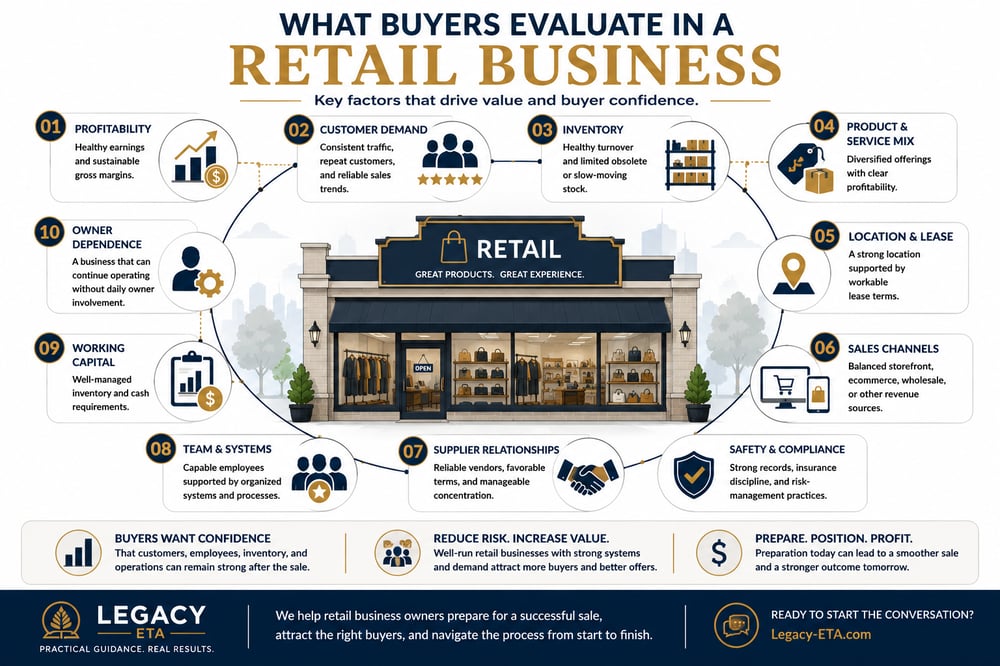
What Do Buyers Look for in a Retail Business?
Buyers evaluate retail businesses through both a financial and operational lens. They want confidence that customer demand will remain strong, inventory can be managed efficiently, employees can continue operating the business, and the company can generate sustainable cash flow after ownership changes.
| Area Buyers Review | What They Evaluate | Why It Matters |
|---|---|---|
| Financial Performance | Revenue, normalized earnings, gross margins, operating expenses, and historical trends | Helps buyers assess earnings quality and sustainability. |
| Inventory | Turnover, aging, obsolete stock, seasonality, and purchasing | Shows how efficiently capital is converted into sales. |
| Customer Demand | Sales trends, repeat customers, reviews, traffic, and retention | Helps buyers understand the durability of future revenue. |
| Location & Channels | Lease terms, store traffic, ecommerce, wholesale, and other channels | Indicates how dependent the business is on one location or channel. |
| Suppliers | Concentration, pricing, terms, lead times, and relationship transferability | Helps buyers evaluate product availability and supply risk. |
| Team & Systems | Managers, employees, POS, inventory controls, reporting, and procedures | Shows whether operations can continue after ownership changes. |
| Owner Role | Purchasing, merchandising, staffing, marketing, vendor relationships, and daily operations | Helps buyers assess transition risk. |
Explore Specialized Retail Business Types
Some retail and consumer-service businesses have unique buyer considerations. Explore our dedicated guidance for these specialized business models.
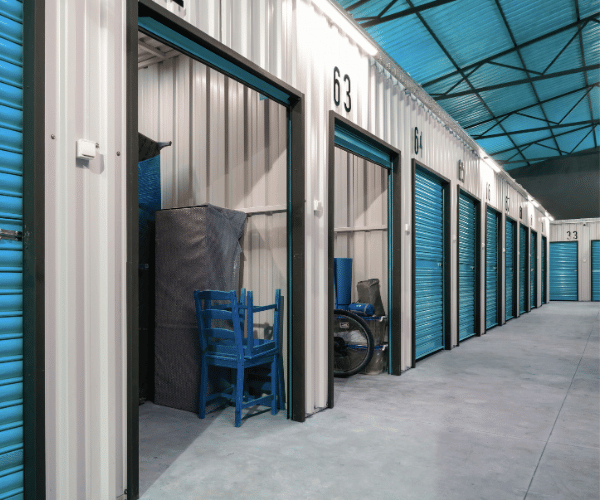
Self Storage
Explore the factors buyers evaluate in self storage businesses, including occupancy, recurring rental revenue, location, operating systems, and expansion potential.
Explore Self Storage →.png?width=600&height=500&name=Legacy%20ETA%20Web%20images%20(19).png)
Window Tint & Film
Learn what buyers look for in window tint and film companies, including lead flow, reputation, service mix, technician depth, customer relationships, and owner dependence.
Explore Window Tint & Film →How to Prepare a Retail Business for Sale
Many issues buyers identify during due diligence are easier to address before the business goes to market. Preparing early gives you time to organize records, review inventory, understand margins, and reduce uncertainty around the company's operations.
- Organize financial records. Prepare tax returns, profit-and-loss statements, balance sheets, sales reports, and supporting schedules that clearly show historical performance.
- Review gross margins. Understand profitability by product, service, location, or sales channel and be prepared to explain significant changes.
- Review inventory. Identify obsolete or slow-moving stock and make sure inventory records accurately reflect what is available for sale.
- Document customer demand. Organize sales trends, repeat-customer information, loyalty data, traffic metrics, and other indicators that demonstrate demand.
- Review your lease and sales channels. Understand lease transfer requirements and document the economics of in-store, ecommerce, wholesale, marketplace, or other channels.
- Document supplier relationships. Compile major vendor relationships, purchasing terms, concentration, lead times, and relevant agreements.
- Document staff and operating systems. Clarify employee responsibilities and organize information on POS, inventory, accounting, ecommerce, and reporting systems.
- Clarify the owner's role. Identify purchasing, merchandising, staffing, customer, vendor, and management responsibilities that depend on you personally.
What Does the Sale Process Look Like?
Every retail business sale is different, but most transactions move through a similar sequence. Understanding the process before going to market can help you prepare for buyer questions and make more informed decisions.
1. Define Your Exit Goals
Determine your preferred timing, financial objectives, employee considerations, transition expectations, and desired involvement after a sale.
2. Understand the Business's Value
Review profitability, gross margins, inventory, sales trends, location, customer demand, suppliers, working capital, staffing, and owner dependence.
3. Prepare the Business for Market
Organize financial statements, inventory records, leases, employee information, vendor documentation, and operating-system information buyers are likely to request.
4. Identify and Qualify Buyers
Potential buyers may include individual entrepreneurs, other retailers, strategic operators, franchise or multi-location groups, or investors seeking established consumer businesses.
5. Negotiate and Complete Due Diligence
Once an acceptable proposal is reached, the buyer typically reviews financial, inventory, lease, customer, employee, vendor, legal, and operational information in detail.
6. Close and Transition the Business
Final agreements are completed and ownership transitions to the buyer. Depending on the transaction, the seller may remain involved for a period to transfer supplier relationships, operating knowledge, employee responsibilities, or major customer relationships.
Considering Selling Your Retail Business?
A confidential conversation can help you understand your options, how buyers may evaluate your company, and what you can do now to prepare for a successful transition.
Talk With Legacy ETAHow Is a Retail Business Valued?
A retail business valuation generally begins with financial performance, but buyers also want to understand the quality and durability of those earnings.
Depending on the size and structure of the business, buyers may analyze normalized cash flow or EBITDA alongside gross margins, sales trends, inventory requirements, lease obligations, customer demand, supplier concentration, working-capital needs, staffing, and growth opportunities.
Inventory may also require separate consideration in the transaction depending on deal structure, inventory quality, and normal operating levels.
A professional valuation can help establish realistic expectations before speaking with buyers and identify the factors that may strengthen or reduce buyer confidence.
How Legacy ETA Helps Retail Business Owners
Selling a retail business involves more than finding someone willing to purchase inventory and take over the location. Owners need to understand value, prepare information buyers can evaluate, protect confidentiality, manage inventory and lease questions, compare offers, navigate due diligence, and plan for a smooth transition.
Legacy ETA helps retail business owners navigate that process with practical guidance from preparation through closing.
- Business valuation and market-positioning guidance
- Preparation of financial and operational information
- Confidential marketing and buyer outreach
- Buyer qualification and offer evaluation
- Support through negotiations and due diligence
- Coordination through closing and ownership transition
Frequently Asked Questions About Selling a Retail Business
How much is my retail business worth?
The value of a retail business depends on factors including normalized earnings, gross margins, sales trends, inventory quality, customer demand, location and lease terms, supplier relationships, staffing, working capital, and owner dependence. A valuation should evaluate the business as a whole rather than rely on a generic industry multiple.
What makes a retail business attractive to buyers?
Buyers generally look for consistent profitability, healthy margins, repeat customer demand, well-managed inventory, a favorable location or diversified sales channels, reliable suppliers, capable employees, and operations that are not overly dependent on the owner.
How does inventory affect the sale of a retail business?
Buyers typically review inventory levels, turnover, aging, salability, and record accuracy. Slow-moving or obsolete inventory may be treated differently from normal operating inventory depending on the transaction.
Can I sell a retail business if the store is leased?
Yes. Buyers will typically review rent, remaining lease term, renewal options, assignment provisions, guarantees, and any landlord approval required to continue operating from the location.
Does ecommerce make a retail business more attractive to buyers?
Ecommerce can diversify revenue, but buyers will evaluate its profitability, customer-acquisition costs, platform dependence, fulfillment requirements, and how effectively it complements the rest of the business.
Can I sell my retail business if I manage most of the daily operations?
Yes, but significant owner dependence can create transition risk. Buyers will want to understand which purchasing, merchandising, vendor, staffing, customer, and management responsibilities depend on you and how they can be transferred.
How long does it take to sell a retail business?
The timeline varies based on preparation, business size, buyer interest, financing, inventory, lease matters, due diligence, and negotiations. Organizing documentation before going to market can help reduce avoidable delays.
Should I get a valuation before selling my retail business?
A valuation can help establish realistic expectations and identify factors that may influence buyer interest before you begin an active sale process. It may also highlight areas such as margins, inventory, lease terms, supplier concentration, or owner dependence that deserve attention before going to market.